DIY protein bars ideas work best when oats, nuts, seeds, dried fruit, and a protein source meet a sticky binder, such as nut butter or blended dates. Press the mix into a lined pan, chill it, then slice. This simple method helps bars hold together without baking and keeps flavor choices flexible.
I know homemade snacks need to fit busy mornings, gym bags, and afternoon hunger. These five recipes use familiar ingredients and clear flavor pairings, from peanut butter oat squares to lemon poppy seed slices. You will also find simple ways to add crunch, keep the mixture from turning dry, and adjust the texture with chilled dates or nut butter. Pick a flavor, gather your ingredients, and let’s get started.
Balancing Dry Ingredients With Sticky Binders
Use roughly one part sticky binder to two parts dry ingredients when building a homemade protein bar, a helpful tip for most DIY protein bars ideas, then adjust by texture rather than adding more protein powder. Nut butter, date puree, honey, or maple syrup supplies moisture and helps oats, chopped nuts, seeds, and dried fruit hold together. Melted coconut oil firms chilled bars, but excess leaves grease.
Mix protein powder into the wet base before adding dry ingredients, since direct contact with oats often leaves powder pockets and crumbly edges. Rolled oats create more chew than quick oats, while puffed grains add light crunch. If the mixture cracks when pressed, add binder in small amounts.
If it feels sticky, add oats or seeds, not extra powder. date puree works especially well with cocoa and dried cranberries.
Chilling Mixtures For Clean Bar Shapes
Chill a pressed bar mixture for at least 60 minutes before slicing, which aligns with many DIY protein bars ideas, since warm binders pull oats and fruit out of the cut line. Line the pan with parchment paper so you lift the slab without stretching its edges. Press the mixture into an even layer, paying extra attention to corners where thin spots dry faster and break first.
A compact square pan gives thicker bars and cleaner portions than a wide tray. Use a sharp, straight-edged knife for crisp cuts through nuts, seeds, and dried fruit. A light sawing motion keeps chunky pieces from dragging across the surface.
Brief freezer chilling helps soft mixtures firm without freezing their centers solid. Separate bars after cutting so their sides stay neat.
1. Chunky Peanut Butter Oat Squares: No-Bake Protein Snack
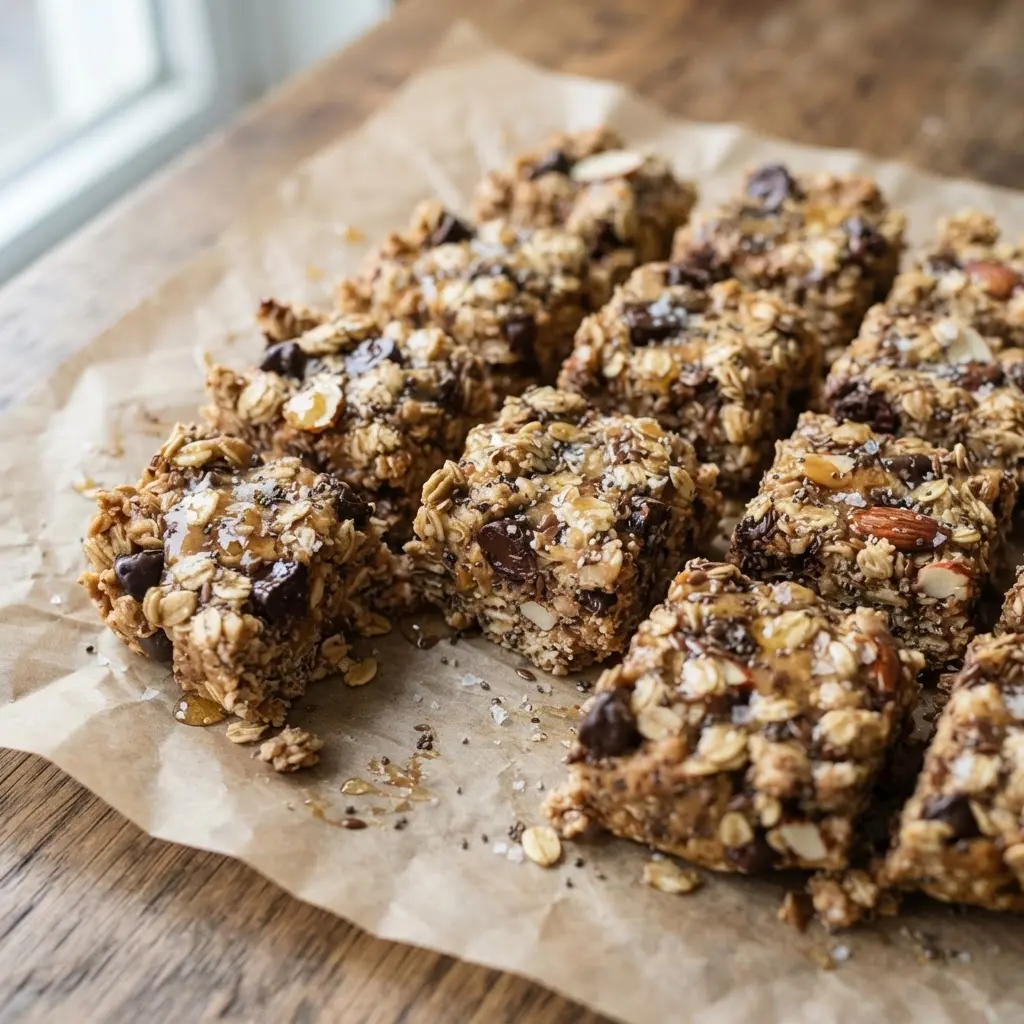
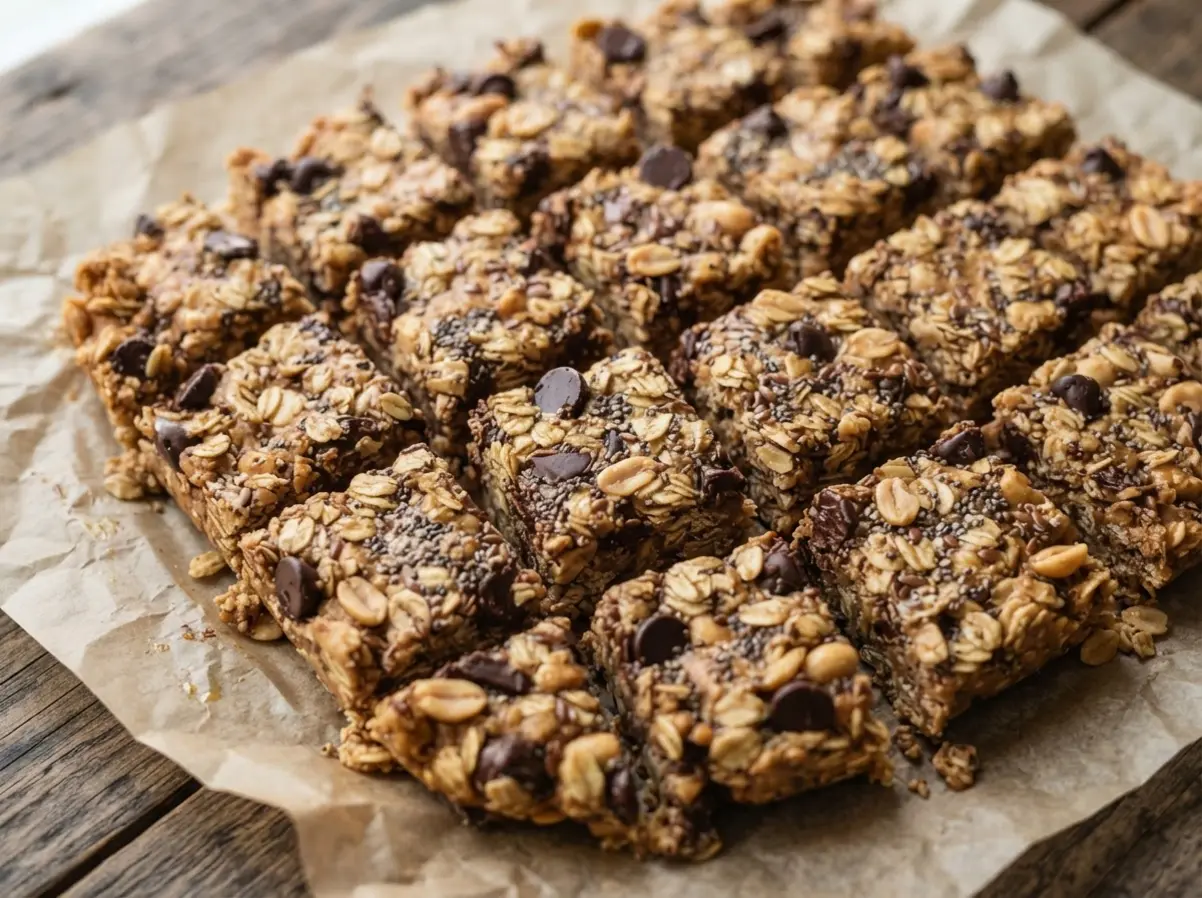
A common mistake is treating these squares like baked bars and pressing a loose mixture into the dish without enough force. Build the base with firm, even pressure so rolled oats, chia seeds, and chocolate chips hold together after chilling. Peanut butter and peanut butter powder create a rich, peanut-butter-brown base, while the oats and seeds give each square a chunky texture.
Line an 8-inch square dish with parchment paper, leaving extra paper over two sides. Stir 1⅓ cups rolled oats with ½ cup peanut butter powder, 2 tablespoons chia seeds, and a pinch of salt, keeping track of DIY protein bars ideas as you measure. Whisk ½ cup peanut butter with 3 tablespoons milk, ¼ cup maple syrup, and 1 teaspoon vanilla until smooth.
Mix the wet and dry ingredients into a thick dough, then fold in ⅓ cup mini chocolate chips. Press the mixture into the dish and refrigerate for at least 1 hour. Research on protein-rich snacks suggests protein supports fullness between meals.
Each square provides approximately 9 grams of protein, giving this snack a portioned format for busy days and planned meal preparation. Lift the chilled slab from the dish using the parchment paper and move it to a cutting board. Cut 16 equal squares with a sharp knife.
Use a second sheet of parchment paper or slightly wet hands if the dough sticks during pressing. Store the finished squares in an airtight container in the refrigerator. Keep the pieces chilled until serving so the dense texture stays firm.
2. Dark Chocolate Coconut Protein Wedges With Toasted Seeds
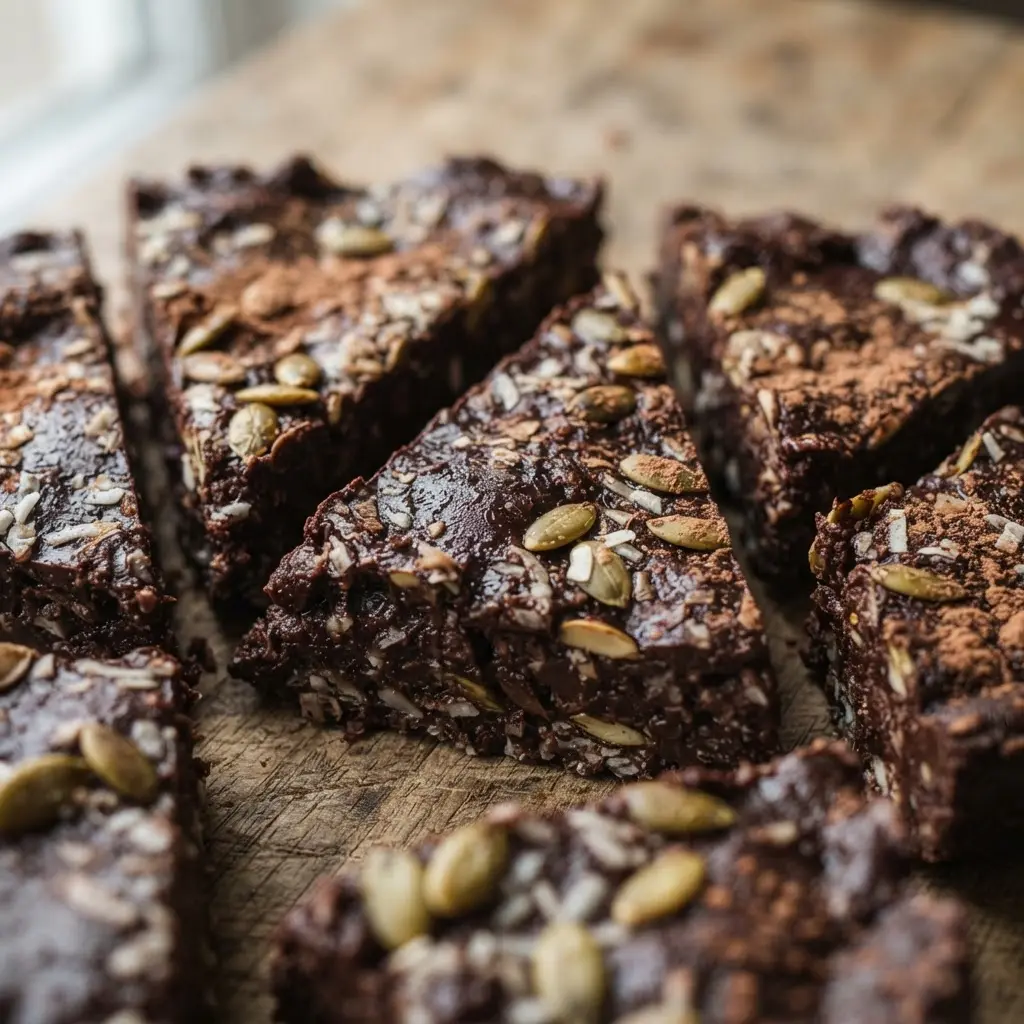
Toast the coconut first at 350°F (175°C) for 5–10 minutes, watching closely as the flakes turn golden. Toasting removes raw flavor and adds a crisp bite. Let the coconut cool before mixing it with the seeds.
Melt 1 cup of 70–85% dark chocolate in a small saucepan over low heat. Stir often until smooth, keeping notes on DIY protein bars ideas, then remove the pan from the heat. Add 2 cups toasted coconut, ⅓ cup pumpkin seeds, ⅓ cup sunflower seeds, 2 tablespoons chia seeds, and optional salt.
Stir until every piece has a chocolate coating. Use a parchment-lined baking sheet to portion the mixture with a cookie scoop or tablespoon. Press each portion into a small wedge, or leave the mixture as clusters.
Add unflavored or chocolate protein powder gradually, a step found in many DIY protein bars ideas. Extra powder raises the protein content, while too much powder makes the mixture dry and harder to shape.
Chill the portions for 10–20 minutes in the freezer, or refrigerate them until firm. Chilling gives the chocolate time to set and keeps the wedges intact during handling. Research suggests seeds provide protein, fiber, and unsaturated fats, while coconut and dark chocolate add texture and a rich taste.
Store finished pieces in an airtight container in the refrigerator for up to two weeks. Avoid high heat during melting, since scorched chocolate develops a bitter taste. Use unsalted seeds or omit added salt when salted chocolate is already part of the mixture.
3. Dried Cranberry Almond Crunch Bars With Chewy Dates
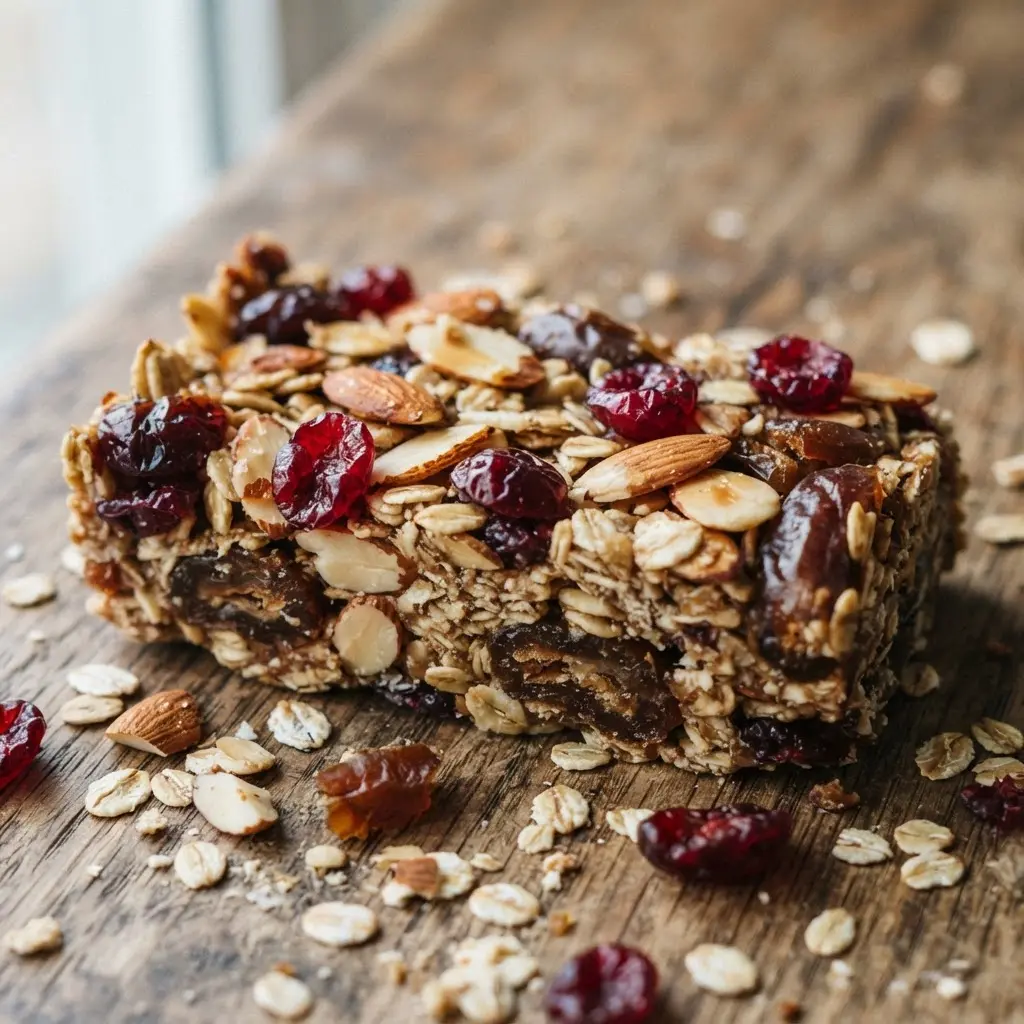
At 3 p.m., a compact snack from the refrigerator is easier to manage than a recipe requiring an oven, which explains why many DIY protein bars ideas skip baking. Start with a food processor and pulse almonds, pitted dates, dried cranberries, and pumpkin seeds until the mixture begins to clump. Leave small almond and cranberry pieces visible for a firm, chewy bite.
Use 1 cup of chopped Medjool dates, 1 cup of dried cranberries, 1/2 cup of almond butter, 1/2 cup of pumpkin seeds, and 1/2 cup of almond slivers. Add cinnamon and almond extract for flavor. Add only 1 or 2 tablespoons of water if the mixture stays crumbly.
Soak firm dates for 15 to 30 minutes, then drain them before processing. Soft dates form a sticky paste and bind the other ingredients without baking. Line an 8-inch square pan with parchment paper.
Transfer the mixture into the pan and use firm pressure to create an even layer. Sprinkle sesame seeds over the top, a step seen in many DIY protein bars ideas, then press them lightly into the surface. Refrigerate the slab for about 1 hour, or longer if the center still feels soft.
Many people find the contrast between tart fruit, chewy dates, and crunchy nuts satisfying in a planned snack. Slice the chilled slab with a sharp knife to create clean bars or squares. Avoid processing until the mixture becomes smooth, since extended blending removes the almond crunch.
Cut only after thorough chilling, and return the bars to the refrigerator if the mixture softens during slicing.
4. Golden Lemon Poppy Seed Slices With Bright Citrus Flavor
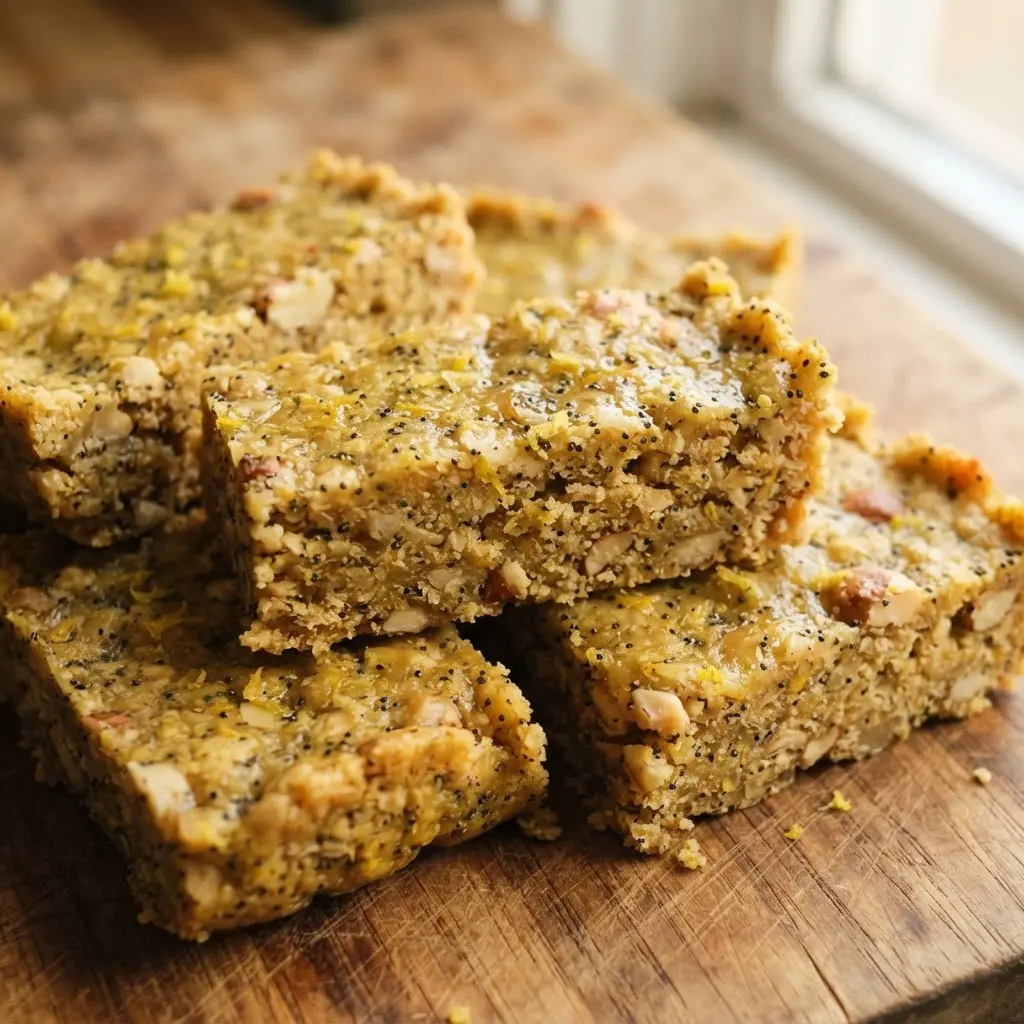
Myth: lemon juice alone creates strong citrus flavor. The zest carries much of the lemon aroma, while juice adds sharp acidity. Use both parts for a brighter, fuller taste.
Fresh poppy seeds add tiny dark flecks and a light crunch to each slice. Start with all-purpose flour, poppy seeds, baking powder, baking soda, and salt, a common base for DIY protein bars ideas. Rub lemon zest into sugar with clean fingertips before adding the eggs, melted butter or oil, sour cream or yogurt, milk, lemon juice, and vanilla.
This step releases lemon oils and spreads them through the batter instead of leaving citrus flavor in isolated spots. Pour the mixture into a lined loaf pan or cake pan. Bake at 350°F (177°C) for 50 to 55 minutes.
Test the center with a toothpick, a standard check for DIY protein bars ideas. A clean toothpick signals a fully baked center, while wet batter calls for more oven time. Research on citrus baking supports combining zest with juice for a more pronounced lemon profile.
A thin glaze made from powdered sugar and lemon juice adds a sweet-tart finish after baking. Prevent a weak or uneven flavor by measuring fresh zest and mixing it into the sugar first. Cool the bake before slicing for cleaner edges, or drizzle the glaze while the surface is warm for a thinner finish.
Add candied lemon slices or mint only after the glaze sets. Store slices in a sealed container and keep the texture moist without allowing the glaze to become sticky.
5. Spiced Cinnamon Raisin Oat Bars With Toasted Seed Crunch
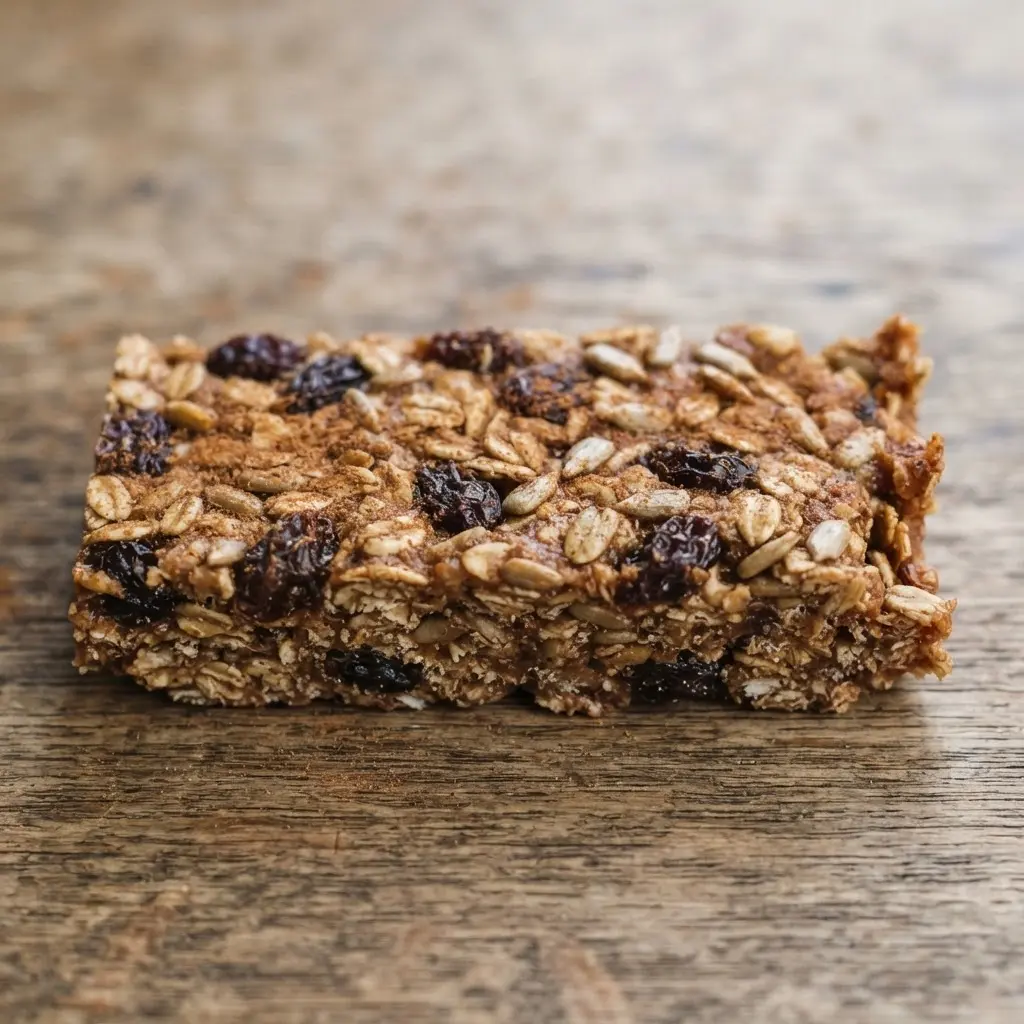
Are these bars firm enough for a portable snack? Yes. Firmly press the mixture into an 8-by-8-inch pan, then cool the baked slab completely before cutting.
The finished bars have golden edges, a set center, visible raisins, and a slightly chewy oat texture. Start by toasting pumpkin, sunflower, and flax seeds at 350°F for 5 to 7 minutes, which matches many DIY protein bars ideas for added crunch. Watch closely because small seeds brown fast.
Mix the rolled oats, seeds, cinnamon, nutmeg, ginger, and salt in one bowl. Whisk melted butter, brown sugar, honey or maple syrup, egg, and vanilla in another. Stir the wet mixture into the dry ingredients, then fold in the raisins.
Press the mixture evenly with the back of a spoon or clean hands. Bake for 25 to 30 minutes, until the edges turn golden and the center looks set. Research suggests fiber-rich foods support fullness, while seeds and oats add texture and nutrients to a portable breakfast or snack.
Use the parchment overhang to lift the cooled slab from the pan. Cut it into 12 rectangles with a sharp knife. Store the bars in an airtight container and keep portions ready for busy mornings.
Avoid slicing while warm because the soft center may crumble and lose its shape.
Refrigerated Storage For Moist Homemade Bars
Keep moist no-bake bars refrigerated in an airtight container, a key step for any DIY protein bars ideas, and eat them within about one week for best texture. Date-heavy bars and mixtures with fresh banana or apple need colder storage because extra water softens oats and shortens their useful life. Store portions in a single layer when possible so stacked bars do not press together.
Place parchment between layers if the container must hold multiple rows. Check for condensation before sealing, since trapped moisture encourages a sticky surface. Room temperature storage suits drier baked bars for a shorter period, but moist no-bake versions need the refrigerator.
Thaw frozen portions in the refrigerator rather than on the counter to protect their texture. A date and nut bar often tastes fresher after overnight chilling.
Conclusion
Homemade snacks feel more personal when you choose the ingredients and flavors yourself. DIY protein bars ideas give you room to balance chewy dates, crisp seeds, creamy nut butter, and a protein powder you already enjoy. The result fits your taste and your routine without much kitchen work.
Start with one recipe and measure the binder slowly. Add more oats if the mix feels too sticky, or add a little more nut butter if it crumbles. Chill the pressed mixture before slicing, then store the pieces in a covered container.
Keep notes on the flavor and texture you liked most. Next time, switch the dried fruit, toast the seeds, or add a small amount of dark chocolate. Your first batch does not need to look perfect. It only needs to taste good and make your next snack easier to reach for.
FAQs
Q: Do homemade protein bars need baking?
A: Most homemade protein bars set in the refrigerator. Chilling firms the binder and helps each piece hold its shape.
Q: Why do my protein bars fall apart?
A: The mixture likely needs more binder or a longer chill time. Stir in nut butter or blended dates, press the mixture firmly, and refrigerate before slicing.
Q: How should I store homemade protein bars?
A: Keep the bars in a covered container in the refrigerator. Use parchment between layers to reduce sticking.
Q: Which protein powder works best in homemade bars?
A: Whey, casein, and plant-based powders all work. Choose a flavor you enjoy, then adjust the binder if the powder makes the mixture dry.
Q: How much protein should a homemade bar contain?
A: The amount depends on the protein powder, nuts, seeds, and serving size. Check the ingredient labels and divide the batch into portions suited to your eating plan.