Building muscle at home feels harder when your weights are light and your room is small. Ways to build muscles at home include bodyweight moves, resistance bands, loaded household items, and planned increases in reps, sets, or resistance. Pair those workouts with enough protein, regular sleep, and rest days. A simple plan, good form, and steady effort support progress without a gym membership.
I know it is easy to start strong, then lose direction when each workout looks the same, even as you explore Ways to build muscles at home. You do not need a large setup. You need a routine suited to your space and a way to track small wins. This guide breaks down useful exercises, band setups, safe household loading, weekly planning, food choices, and recovery. I will keep each step practical, so you know what to do during your next session. Pick one starting point, write down your reps, and let’s get moving.
Stable Surfaces And Equipment Anchor Checks
Place every home workout station on a hard, level floor, and check each support before loading it with your body weight. A rubber exercise mat should grip the floor without bunching, especially beneath a bench or during standing presses.
Test a bench for rocking, inspect dumbbell handles for loose plates, and keep kettlebells clear of walls and glass, following practical Ways to build muscles at home. Mount a pull-up bar only in a doorway or frame rated for repeated bodyweight use, then check its fasteners before each session. Skip sofas, rolling chairs, and lightweight tables because shifting support changes your alignment and raises fall risk.
Keep enough space for your elbows, knees, and feet to move freely without striking nearby objects. A clear training area also helps you keep a steady range of motion when fatigue arrives.
Warmup Sets For Movement Readiness
Use two or three light warmup sets before heavy work, a routine that supports safe Ways to build muscles at home, stopping each set while your movement still feels smooth. Choose a load that lets you practice the same joint positions you will use in your working sets, rather than rushing through loose repetitions.
Bodyweight sessions need a different approach, so rehearse the easier version of a push-up, squat, or row before choosing a harder variation. These warmup sets raise local muscle temperature and give your shoulders, hips, knees, and wrists time to prepare for resistance. Pay attention to joint pain, pinching, or sharp discomfort, since those signals call for a lower load or a different movement.
Keep rest long enough for steady technique, because tired form hides your true strength and makes the next set less useful.
1. Foundational Bodyweight Exercises for Full-Body Strength
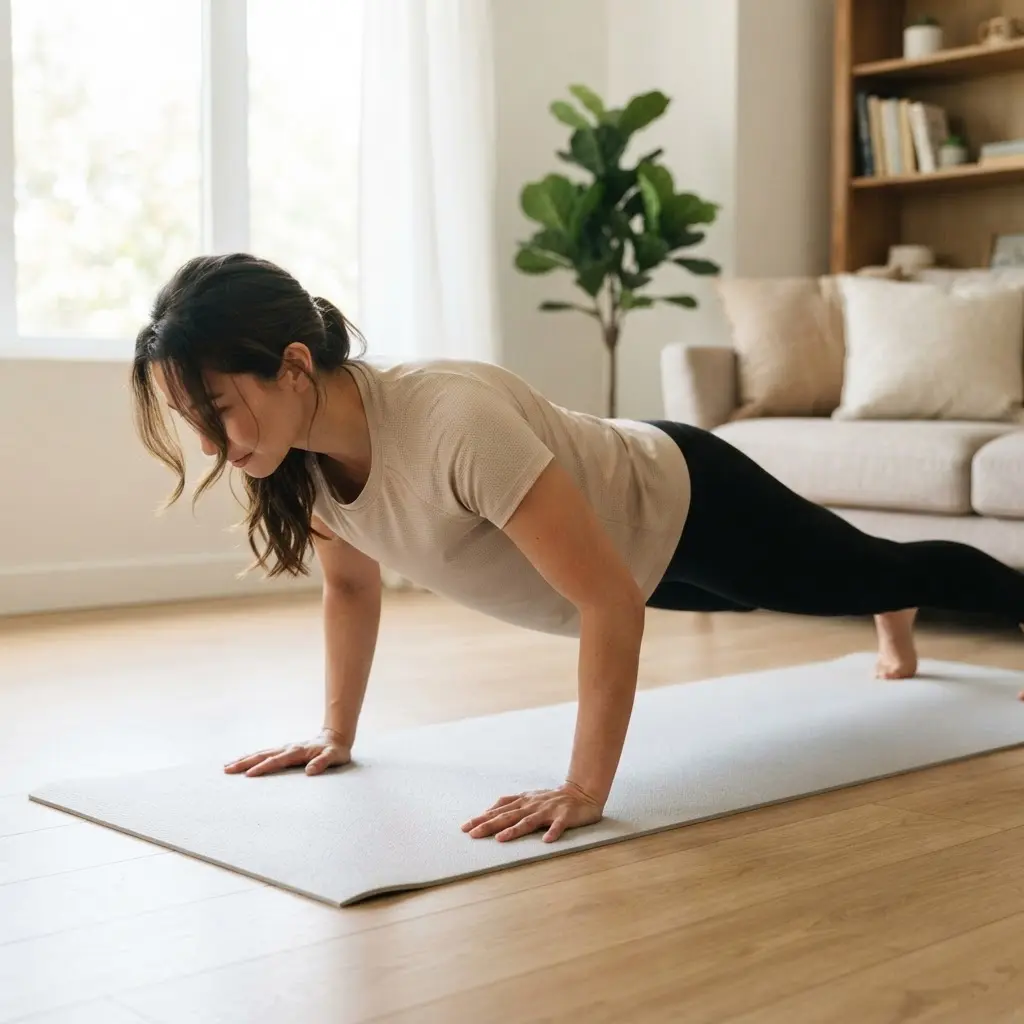
A common mistake is treating bodyweight exercises as easy by default, but consistency matters when reviewing Ways to build muscles at home. Control each movement and use a range of motion suited to your current ability.
Bodyweight squats train the quadriceps, hamstrings, glutes, hips, and core. Reverse lunges add single-side work, which challenges balance and hip control.
Build the session around several movement patterns, applying core Ways to build muscles at home. Use push-ups for the chest, shoulders, triceps, and trunk. Choose an incline push-up with your hands on a wall or sturdy chair for a lighter version.
Use an elbow or palm plank to train core stability, shoulder control, and hip position. Add hip bridges to involve the glutes and hamstrings, or use single-leg deadlifts for balance and posterior-chain strength.
Start with a short circuit instead of rushing through advanced variations, a reliable step among Ways to build muscles at home. Complete 8 push-ups, 8 reverse lunges on each side, and a 15 to 30-second plank.
Rest for one minute. Repeat the circuit two more times. This routine takes about 15 minutes and trains pushing strength, lower-body strength, and core stability.
Research suggests resistance training supports muscle and strength gains when the work provides enough challenge and progresses over time, reflecting proven Ways to build muscles at home. Increase repetitions, slow the lowering phase, pause at the hardest point, or choose a harder variation such as decline push-ups or Bulgarian split squats.
Add burpees or mountain climbers for a cardiovascular challenge, but keep controlled strength work as the base. Choose explosive exercises only after stable technique is established.
2. Resistance Band Training Systems for Home Muscle Work
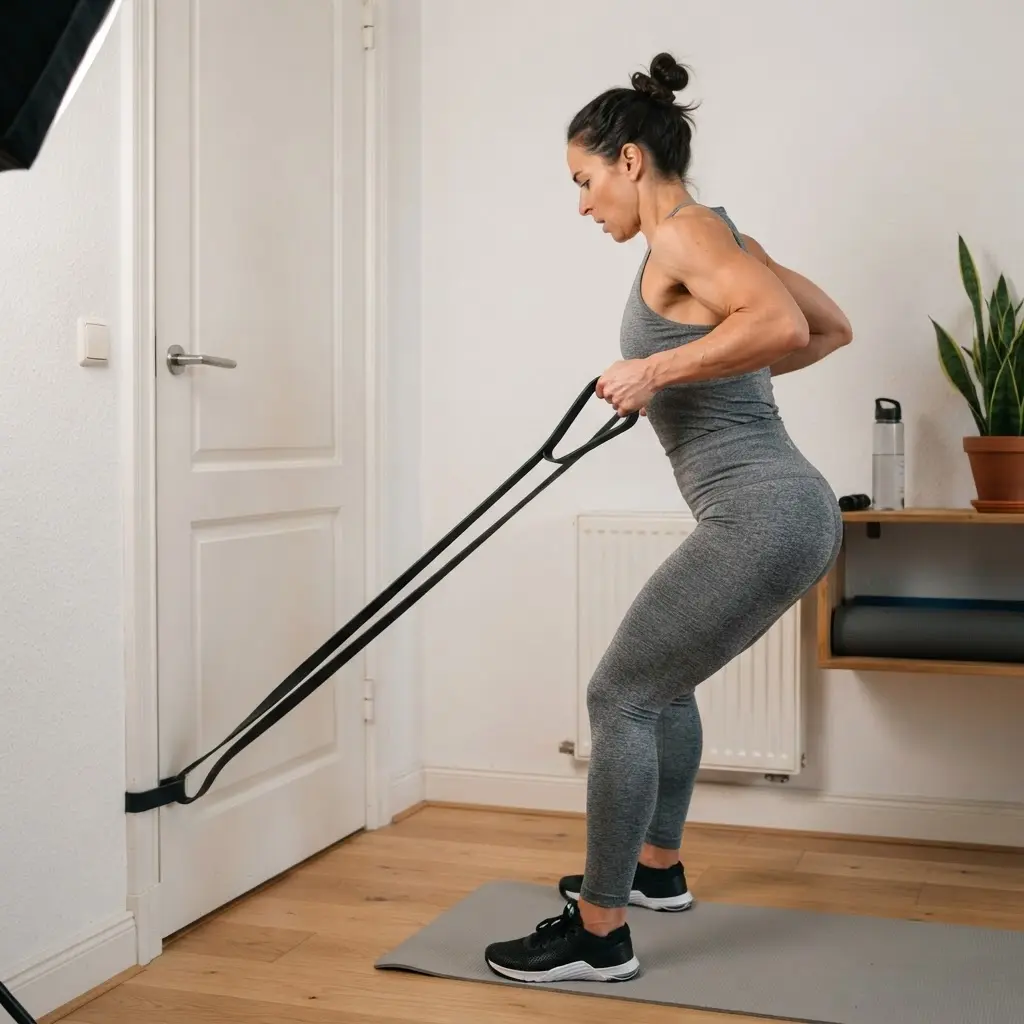
Start with a complete resistance band system, not a single loose band, following effective Ways to build muscles at home. Choose a set with several tension levels, handles, ankle straps, and at least one secure anchor.
A full setup supports pressing, rowing, squatting, curling, and pulling from different positions. Keep the equipment close to your training area so regular resistance training stays practical.
Select one band for lighter movements and combine bands for larger muscle groups, matching standard Ways to build muscles at home. Some systems provide 5 to 150 pounds when bands are combined, while other systems list up to 400 pounds.
Attach each band to a handle, bar, ankle strap, or anchor before starting. Check every connection, then move through each exercise slowly.
Set the anchor at the correct height for the movement, which is essential for safe Ways to build muscles at home. A low anchor suits rows and curls.
A high anchor suits pulldowns and pressdowns. A wall system with several height settings gives more exercise choices than a fixed door anchor. Research suggests progressive overload supports muscle growth, so raise tension, add another band, or increase repetitions as your strength improves.
Choose stackable bands when you want a full-body training plan in a small space, a flexible choice among Ways to build muscles at home. Review the stated resistance carefully because the highest figure often comes from several bands used together. Test the door, wall, or outdoor anchor before applying heavy tension.
Stop using any band with cracks, thinning, or damaged clips.
3. Household Weight Loading Techniques for Added Resistance
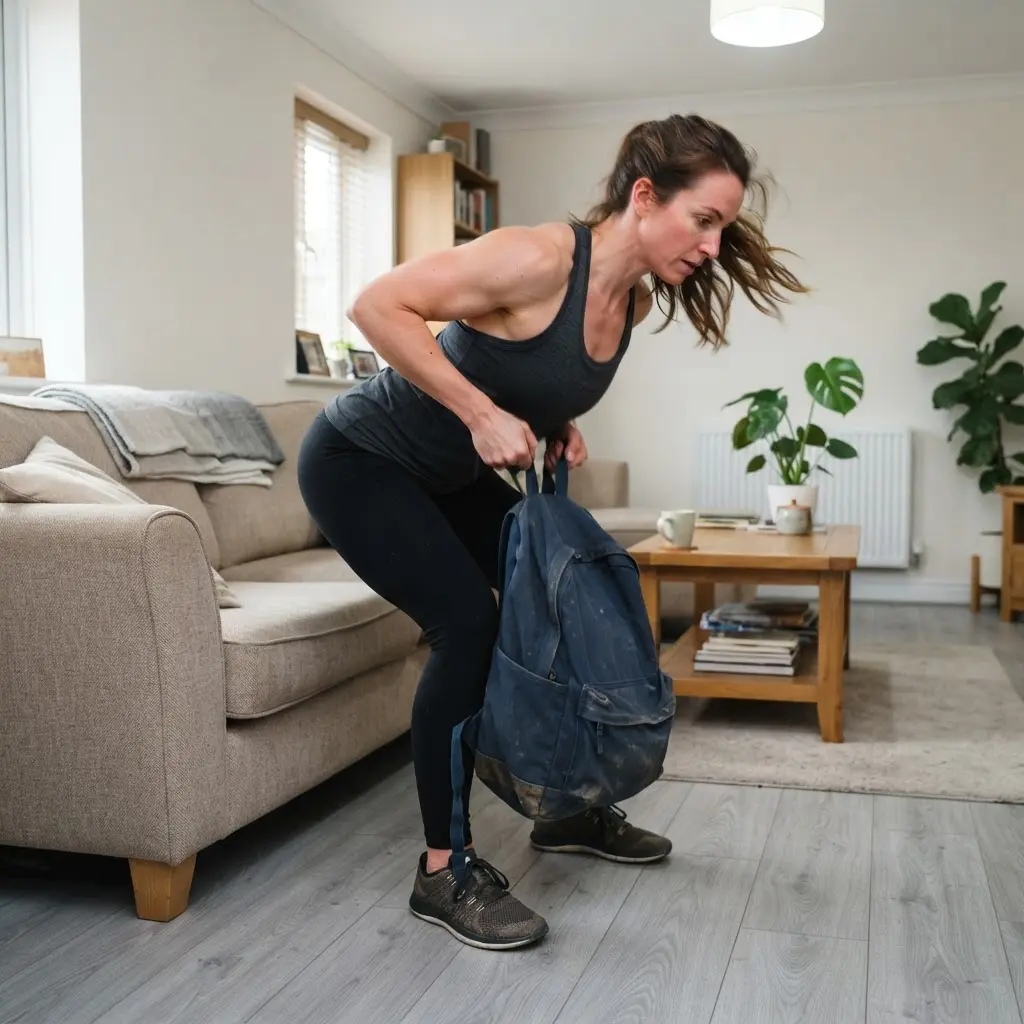
At 6:30 in the morning, load a backpack with books before starting squats or lunges, showing how simple tools match Ways to build muscles at home. Tighten every strap and pack the contents firmly so the weight does not move.
Begin with a load allowing 10 to 15 controlled repetitions. A stable backpack adds resistance without requiring a full set of gym equipment.
Use a sealed water jug for rows, goblet squats, or Romanian deadlifts, proving that everyday items work for Ways to build muscles at home. Fill the jug partly at first, close the cap tightly, and inspect the handle before each set.
A duffel bag filled with towels or sealed rice bags works for loaded carries and hip hinges. Research suggests progressive resistance training supports muscle growth when training demand increases over time.
Keep the load unchanged while improving control, range of motion, or lifting tempo, following steady Ways to build muscles at home. Slow the lowering phase and pause briefly at the hardest point. Add repetitions or another set before increasing weight.
Once every set reaches 15 smooth repetitions, add a small amount of weight or choose a harder exercise variation.
Test every household object before a full workout, a necessary step for safe training routines. Perform five slow repetitions and stop if the container shifts, the grip becomes slippery, or joint alignment changes. Avoid cracked handles, loose lids, weak seams, and damaged straps.
Complete 5 to 10 minutes of light movement before loaded exercise, then train on a stable, non-slip surface.
4. Progressive Overload Principles for Steady Muscle Growth
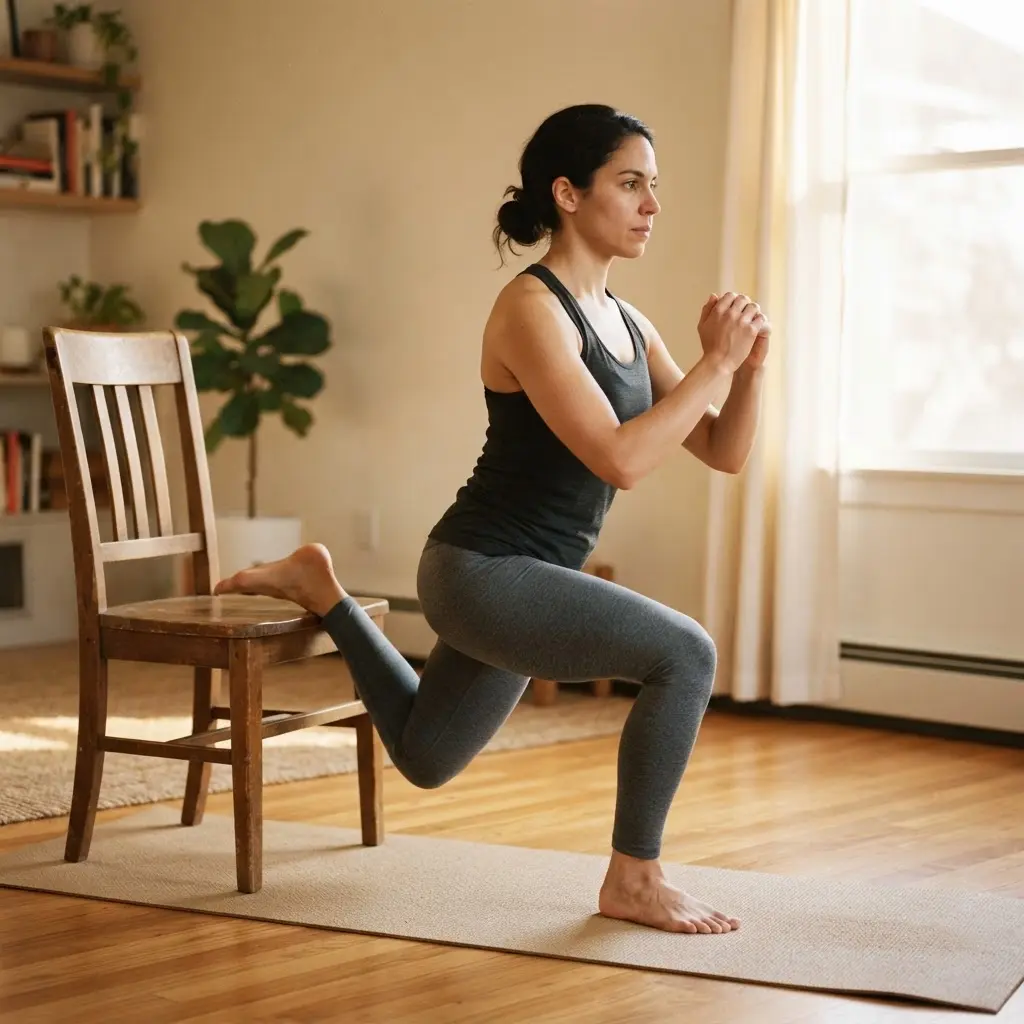
Many people believe heavier weights are the only path to muscle growth, but that idea misses basic Ways to build muscles at home. The truth is broader. Progressive overload means increasing the demand placed on a muscle over time.
Add resistance after completing your target repetitions with sound form. Without added weights, increase repetitions, sets, range of motion, or exercise difficulty.
Use one change at a time. For example, complete three sets of 10 squats with steady control, then perform 11 or 12 repetitions during the next session. A training log should record the exercise, resistance, repetitions, sets, rest time, tempo, and form quality.
Written records show whether the workload is truly rising.
Home training offers many ways to progress. Move from wall push-ups to incline push-ups, then to floor push-ups. Add dumbbells or bands when bodyweight work becomes manageable. Slow the lowering phase for two to three seconds to increase time under tension. A controlled tempo makes familiar movements more demanding without requiring heavier equipment.
Research suggests steady increases in training demand support muscle adaptation when recovery matches the workload, a principle behind Ways to build muscles at home. Avoid adding resistance, volume, frequency, and shorter rest periods during the same week. Schedule recovery with rest days, adequate food, sufficient protein, and regular sleep. Stop a progression when form breaks down, and treat sharp pain as a reason to stop rather than a sign of progress.
5. Effective Home Workout Structuring for Weekly Progress
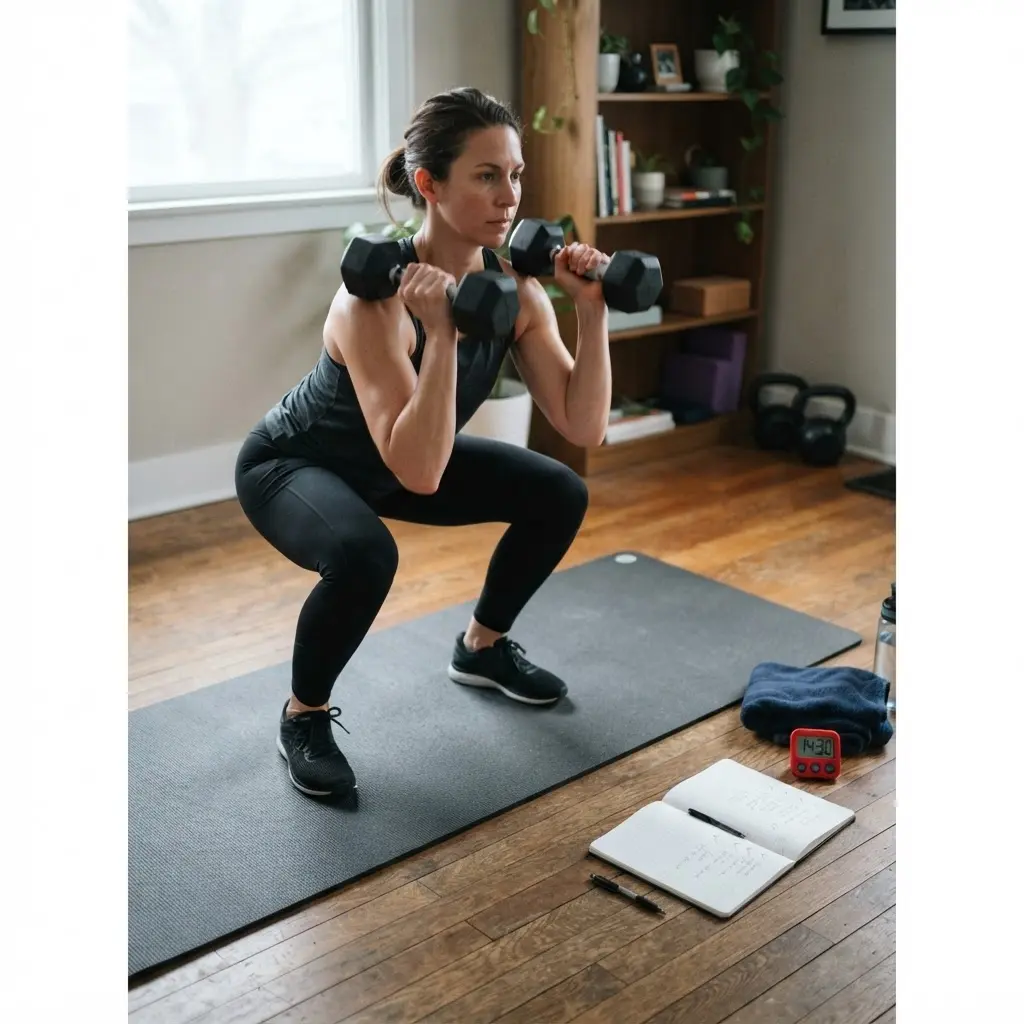
How should a home routine be arranged for steady progress? Follow a fixed weekly schedule with three to five training days, planned rest, and a clear record of each session.
Start every workout with 5–10 minutes of light cardio, arm circles, and leg swings. This prepares the body for controlled movement.
Choose full-body sessions when training time is limited. Use an upper/lower split when four weekly sessions fit your schedule. Place compound movements first, such as squats, push-ups, rows, and deadlifts. Follow with isolation work for areas such as the biceps or triceps. Keep most muscle-growth work within 6–12 repetitions.
Apply progressive overload gradually. Add a repetition, set, small amount of weight, or longer range of motion after the current workload feels controlled. Resistance bands, dumbbells, kettlebells, water jugs, and heavy books provide useful loading options.
Record exercises, sets, repetitions, resistance, and movement quality in a workout journal.
Schedule rest or active recovery between demanding sessions. Avoid training every workout at maximum intensity, especially when soreness or fatigue changes your form. Aim for 7–9 hours of quality sleep and maintain balanced nutrition to support muscle repair.
Research suggests planned routines improve consistency because progress becomes easier to measure. Keep the weekly structure stable for several weeks before changing exercises, unless pain or unusual fatigue requires adjustment. Finish each session with 5–10 minutes of easy movement and static stretches held for about 20–30 seconds.
6. Protein Requirements for Hypertrophy and Daily Recovery

Spreading protein across four meals supports repeated muscle repair better than placing the full daily amount in one sitting. Distribute protein every 3–4 hours to give muscle protein synthesis several chances to rise.
Most exercising adults need 1.4–2.0 grams per kilogram of body weight each day. Resistance-trained adults focused on maximum growth often use 1.6–2.2 grams per kilogram. Research suggests total daily intake matters more than exact pre-workout or post-workout timing.
Calculate your target by multiplying body weight in kilograms by your chosen range. A 70-kilogram adult using 1.6 grams per kilogram needs about 112 grams each day. Divide the total across three or four meals.
Aim for roughly 0.25 grams per kilogram per serving, often equal to 20–40 grams of high-quality protein. A serving should provide essential amino acids and about 700–3,000 milligrams of leucine.
Use eggs, dairy foods, fish, poultry, soy, beans, or a suitable protein powder to meet the target. Protein above 20 grams in one meal is not automatically wasted.
Some extra amino acids undergo oxidation, while others still support tissue building. Protein before sleep may reduce the overnight decline in muscle protein synthesis. Protein targets fit broader healthy weight gain methods for people adding calories alongside resistance training.
Keep daily intake within a practical range rather than chasing the highest number. Intakes above 3.0 grams per kilogram are not necessary for most people. Always consult a healthcare professional before making changes to your health routine, especially with kidney disease, another medical condition, or specific dietary restrictions.
7. Recovery and Muscle Repair Strategies for Better Results

Training hard every day is a common mistake. Muscles need time to repair after demanding sessions. Schedule at least one lower-stress day between hard workouts for the same muscle groups. Reduce volume or intensity when soreness lasts several days, energy drops, or performance falls.
Eat a balanced meal after a demanding session. Aim for 1.6–2.2 grams of protein per kilogram of body weight each day, spread across meals and snacks. Include carbohydrates to restore muscle fuel, and drink water throughout the day.
Research suggests adequate protein, energy, and hydration support muscle repair and training adaptation.
Protect 7–9 hours of sleep each night. Keep a fixed sleep and wake schedule. Use a dark, quiet bedroom and follow a screen-free wind-down routine.
Sleep supports many repair and growth processes, so repeated short nights can limit progress even when workouts are consistent.
Use low-intensity movement on rest days. Walk, cycle easily, or perform gentle mobility work without turning recovery into another hard workout. Foam rolling or static stretching can address tightness after training.
Meditation, deep breathing, yoga, and quiet time also reduce stress load.
Do not train through severe or unusual pain, significant swelling, or signs of injury. Always consult a healthcare professional before making changes to your health routine.
Adjusting Training After Progress Plateaus
When your repetitions stall for two or three sessions, reduce the load slightly and rebuild with cleaner form instead of forcing more work. Record each set in a training log, including repetitions, resistance, range of motion, and the effort you felt near the end.
If the same weight feels difficult after poor sleep or lingering soreness, take an extra rest day and return with fewer sets. When technique stays reliable but progress stops, add one set, slow the lowering phase, or choose a harder bodyweight variation.
Change one training variable at a time, so you know which adjustment helped and your joints have time to adapt. Keep the new demand for several sessions before judging it, since muscle growth follows repeated hard work rather than one unusually tough workout.
Conclusion
Training at home often becomes part of your daily rhythm. You learn which movements feel strong, which ones need more practice, and how small changes keep sessions useful.
Ways to build muscles at home work best when they fit your real schedule, space, and energy. Start with three weekly sessions. Choose one movement for each major muscle group, stop each set with good form, and record your reps or resistance.
Add a rep, set, or small amount of load when your current plan feels manageable. Eat a protein-rich food at each meal, drink water, and keep a regular sleep time. Rest when soreness changes your movement or normal tasks.
You do not need perfect workouts. You need repeatable sessions and patience. Keep your plan simple for four weeks, review your notes, and choose one small change for the next week.
FAQs
Q: How often should I train each muscle at home?
A: Train each major muscle group two or three times each week. Leave at least one day between hard sessions for the same area. Begin with fewer sets if soreness affects your movement.
Q: How much protein supports muscle growth?
A: A common range for active adults is about 1.6 to 2.2 grams of protein per kilogram of body weight each day. Spread protein across meals with foods such as eggs, yogurt, beans, fish, poultry, or tofu. A registered dietitian can help with personal needs.
Q: Do bodyweight exercises build muscle without weights?
A: Bodyweight exercises support muscle growth when sets feel challenging and form stays steady. Use slower lowering, longer pauses, harder variations, or more repetitions as strength improves. Push-ups, squats, rows, and split squats cover many major muscles.
Q: How do I make home workouts harder over time?
A: Add repetitions, sets, resistance, or a harder exercise variation. Change one factor at a time and write down each session. Stop a set when form starts to break down.
Q: How much sleep helps muscle recovery?
A: Most adults benefit from seven to nine hours of sleep each night. Keep a steady bedtime, limit late caffeine, and make the room dark and quiet. Poor sleep often makes training feel harder and slows recovery.