The Best breakfast foods for sustained energy combine protein, fiber, healthy fats, and slow-digesting carbohydrates. Eggs, plain Greek yogurt, oats, berries, nuts, and seeds give your body a steadier mix of nutrients than sugary cereal or white toast. This balance also helps you feel full through the morning.
Morning energy often drops when breakfast is built around refined carbohydrates alone, which makes tracking the Best breakfast foods for sustained energy essential for steady mornings. A balanced plate supports steadier blood sugar and helps reduce mid-morning hunger. Steel-cut oats, whole-grain toast, fresh fruit, and a protein source make a practical starting point. I’ll show you five food groups, explain why each one helps, and share simple ways to pair them.
Building Breakfasts Around Protein And Fiber
Pairing 20 to 30 grams of protein with at least 5 grams of fiber at breakfast helps energy last longer through the morning, and the Best breakfast foods for sustained energy fit right into this range. Greek yogurt supplies slow-digesting protein, while oats, berries, and chia seeds add fiber-rich carbohydrates. Protein supports fullness, and fiber slows how quickly carbohydrates enter the bloodstream, which helps reduce a quick rise followed by a crash.
Add avocado, walnuts, or pumpkin seeds for unsaturated fats, since these fats help a meal feel satisfying without relying on sugary toppings. Eggs with vegetables and whole-grain toast offer another balanced combination, with protein, produce, and steady-digesting carbohydrates in one plate. Check serving sizes, since a small yogurt cup with fruit might need seeds or toast to provide enough food for a long morning.
Checking Added Sugars In Packaged Breakfasts
Choose a breakfast item with fewer than 6 grams of added sugar per serving when comparing packaged cereals, yogurt, or oat cups. The Nutrition Facts label separates added sugar from total sugar, so the label shows whether sweeteners account for much of the serving.
Flavored yogurt often needs a second look, since fruit flavoring and syrups raise sweetness while protein stays modest. Granola and instant oatmeal also vary widely, with some servings closer to dessert than a balanced meal, so checking for the Best breakfast foods for sustained energy saves you from hidden sugar spikes. Pair a lower-sugar cereal with milk, nuts, and berries, or add seeds to plain yogurt for fiber, protein, and unsaturated fat.
Whole fruit brings fiber and chewing, while juice delivers concentrated sugar with little fiber. A short ingredient list does not guarantee low sugar, so compare the numbers across similar serving sizes.
1. High Fiber Complex Carbohydrates for Steady Morning Energy
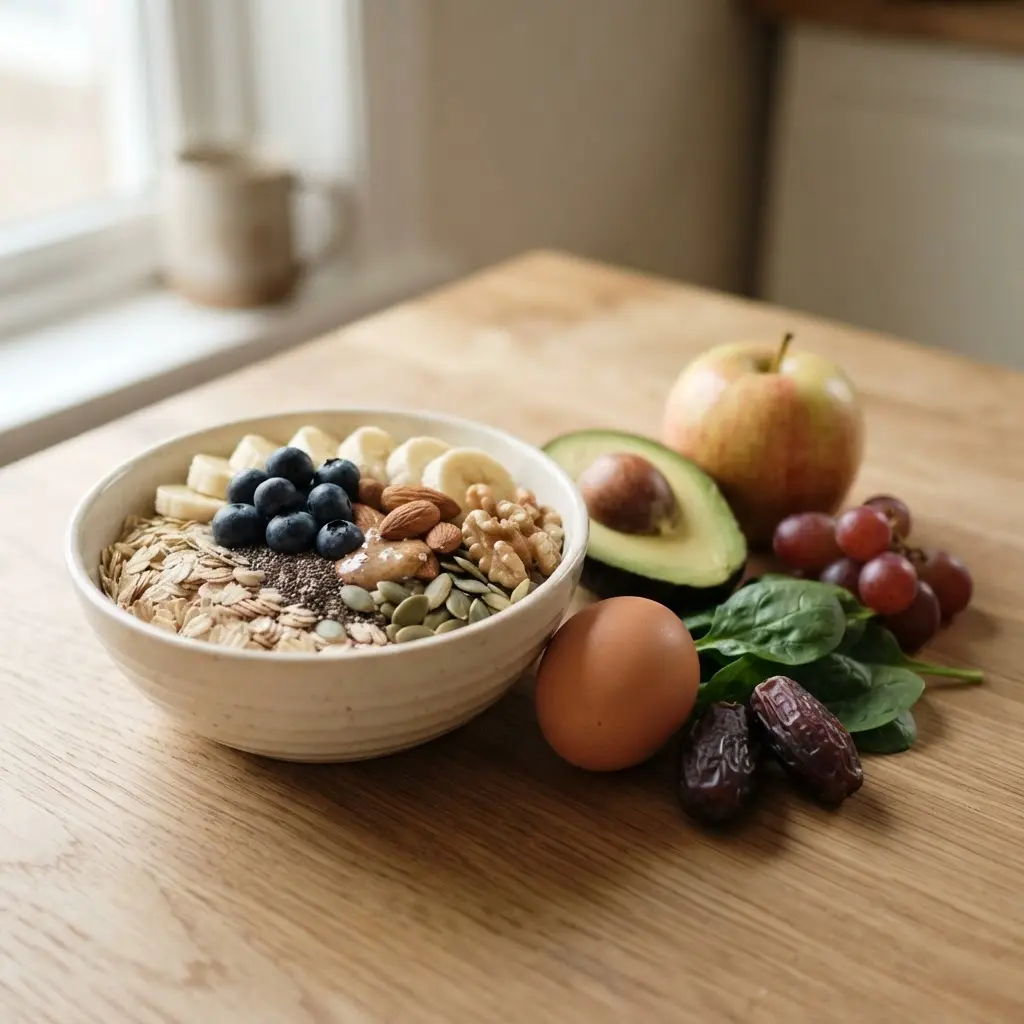
A common mistake is starting the day with refined cereal, pastries, or white toast and expecting lasting energy. Choose a high-fiber carbohydrate instead. Oats, quinoa, beans, lentils, fruit, and sweet potatoes take longer to digest than low-fiber choices, which explains why the Best breakfast foods for sustained energy always include them.
Build breakfast with one whole-grain base, then add fruit or vegetables. Top oatmeal with berries, chia seeds, and nuts. Serve whole-grain toast with avocado.
For packaged choices, compare labels and choose healthier breakfast cereals with whole grains and limited added sugar, keeping you close to the Best breakfast foods for sustained energy. A breakfast containing beans or lentils also supplies fiber and fits well with eggs, vegetables, or whole-grain toast.
Research on dietary fiber supports slower carbohydrate absorption and greater fullness after meals. Choosing the Best breakfast foods for sustained energy guarantees these benefits. Many people find a fiber-rich breakfast reduces hunger before lunch, which supports steadier eating through the morning.
Add fiber gradually over several days. Drink enough water as intake rises, since a sudden increase without adequate fluids often causes gas, bloating, or constipation. Choose one high-fiber food at breakfast first, then add another as your digestion adjusts.
2. High Quality Protein Sources for Lasting Breakfast Fullness
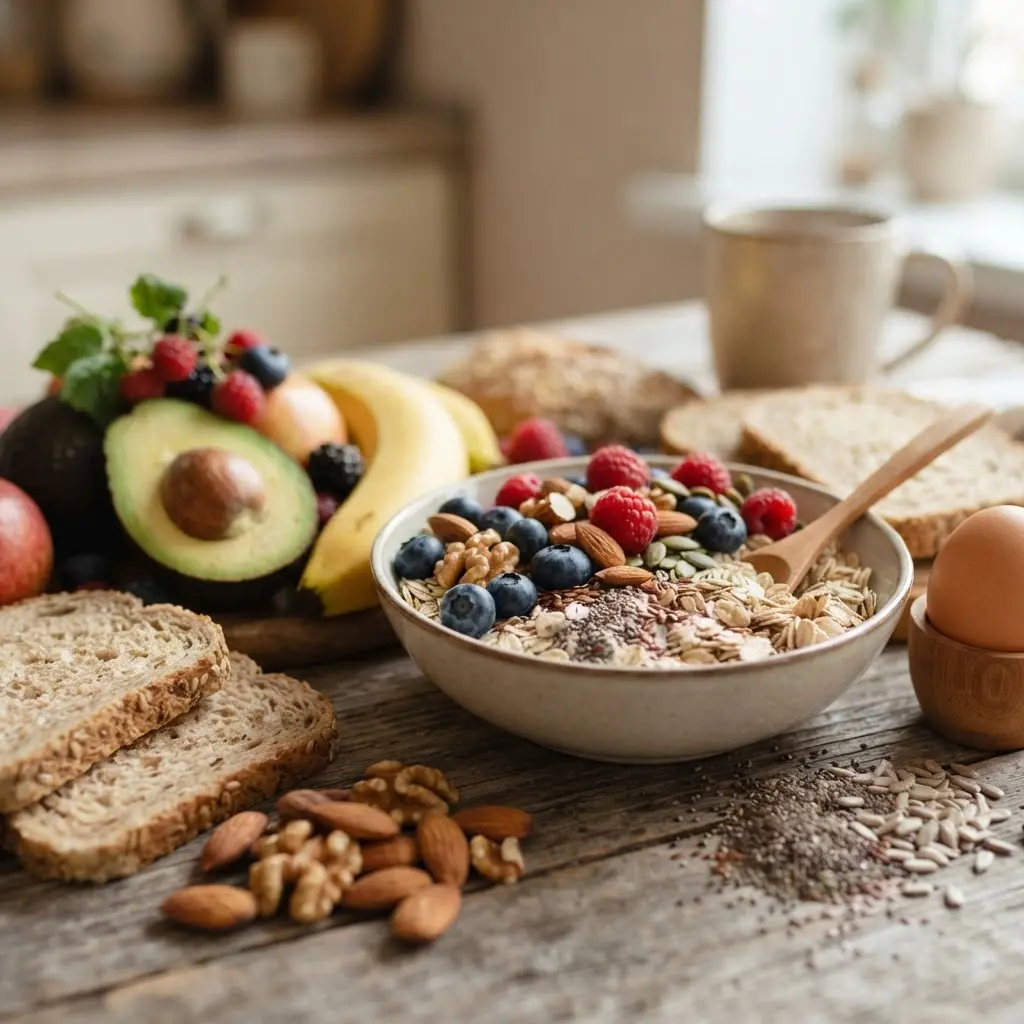
Start breakfast with a primary protein source, such as eggs, Greek yogurt, tofu, or beans. Build the meal around high protein superfoods to support fullness through the morning. One egg provides about 6 grams of protein, while Greek yogurt or skyr supplies roughly 15 to 20 grams per serving, which shows why the Best breakfast foods for sustained energy matter so much. A breakfast near 30 grams of protein offers a useful target, although personal needs differ.
Add a fiber-rich carbohydrate to complete the meal. Stir Greek yogurt into oats, serve eggs with whole-grain toast, or combine tofu with quinoa and vegetables. The Best breakfast foods for sustained energy follow this exact pattern daily. Fiber slows digestion and supports steadier energy after eating.
Fruit, oats, whole-grain bread, and quinoa all provide useful options. Include healthy fats from chia seeds, hemp seeds, nuts, or nut butter. Two tablespoons of chia seeds provide about 5 grams of protein, while three tablespoons of hemp seeds provide about 10 grams. These foods add fiber and fat, which make a breakfast more satisfying without relying on protein alone.
Choose cottage cheese, kefir, smoked salmon, lentils, or lupini beans for more variety. Cottage cheese provides about 13 grams per half cup, and smoked salmon provides about 20 grams per 3 ounces. Check each nutrition label because sausage, protein milk, and protein powders differ by brand. Whole foods should form the main pattern.
Collagen peptides can add protein, but they should not replace varied sources. People with kidney issues should consult a doctor before substantially increasing protein intake. Always consult a healthcare professional before making changes to your health routine.
3. Satiety Promoting Healthy Fats for Balanced Morning Meals
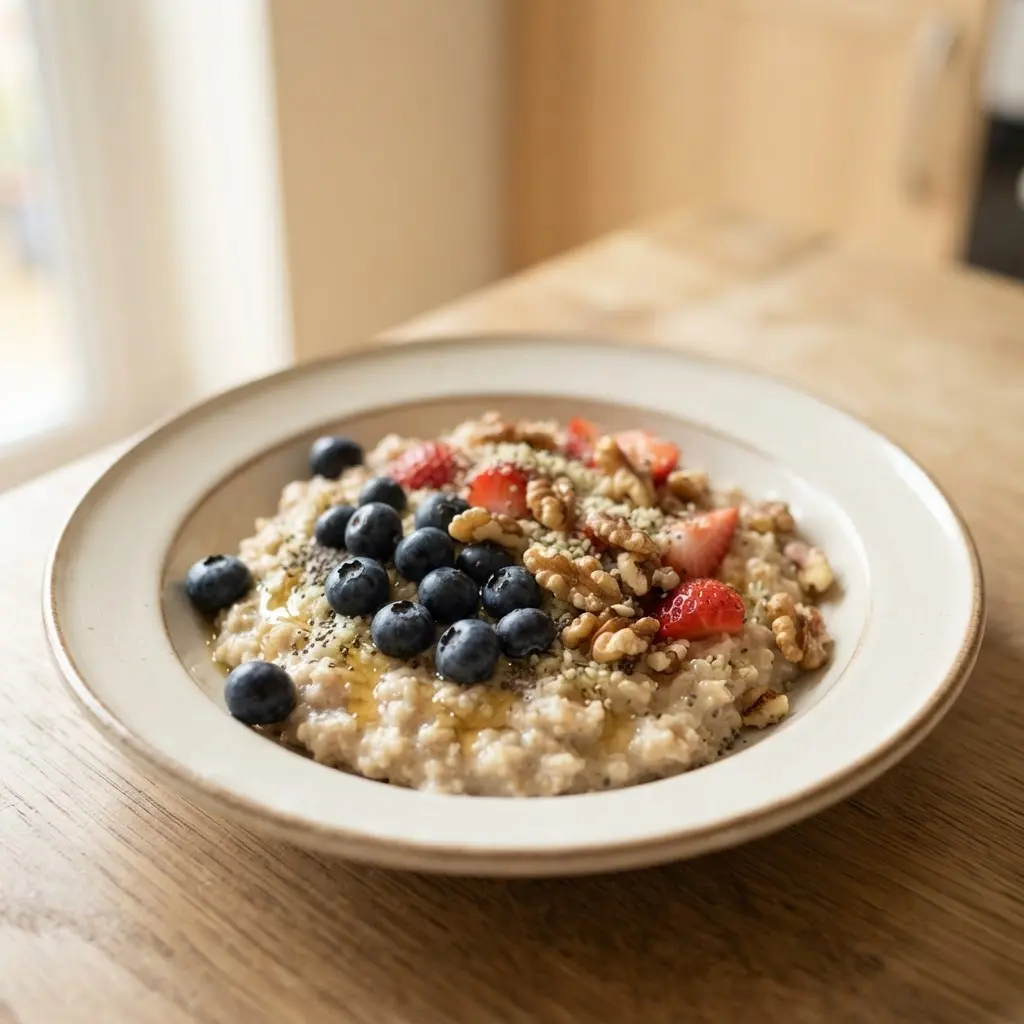
At 7:30 a.m., a commuter eats toast with avocado and eggs before a long stretch of meetings. The fat, protein, and fiber make the meal more satisfying than refined toast alone, proving that the Best breakfast foods for sustained energy really work together. Research suggests meals combining these nutrients support fullness during the morning.
Start with whole-grain toast, then add sliced avocado and one egg for a balanced plate. Choose almonds, walnuts, pumpkin seeds, chia seeds, or ground flaxseeds for oatmeal and yogurt, and these options align perfectly with the Best breakfast foods for sustained energy. Add about one tablespoon of chia or flaxseeds to a smoothie, or use a small spoonful of nut butter on toast.
These foods provide varying amounts of unsaturated fat, protein, and fiber. Keep portions moderate because nuts, seeds, oils, and avocado contain many calories in a small volume. Build volume with filling low-calorie foods when a smaller portion of avocado, nuts, or seeds suits your morning meal.
Choose full-fat Greek yogurt with berries and seeds instead of eating sweetened yogurt alone. Smoked salmon on whole-grain toast supplies protein and omega-3 fats. Use a small amount of extra-virgin olive oil to sauté vegetables for an omelet. Do not treat healthy fat as a complete breakfast by itself.
Pair each portion with protein and high-fiber carbohydrates from eggs, oats, fruit, vegetables, or whole grains. Adjust portions according to hunger, fullness, health goals, and personal tolerance. Always consult a healthcare professional before making changes to your health routine, especially when managing cardiovascular disease, diabetes, food allergies, or digestive disorders.
4. Antioxidant Rich Fresh Fruits for Breakfast Energy

Fruit alone is often treated as a complete answer for lasting morning energy. Fruit supplies carbohydrates for morning fuel, yet a fruit-only meal often lacks protein and fat. Build a steadier breakfast by adding a whole apple with skin to yogurt, oats, nuts, or seeds. Apples provide fiber, quercetin, and other plant compounds. Fiber adds fullness and slows digestion.
Do not treat all fruit as nutritionally identical. Berries provide anthocyanins and vitamin C. Oranges, grapefruit, and other citrus fruits provide vitamin C and flavonoids. Pomegranate seeds supply punicalagins and anthocyanins, while kiwifruit provides vitamin C and vitamin E. Add a mixed fruit topping to oatmeal or a breakfast bowl to bring several plant compounds into one meal.
Use fresh or frozen berries and cherries in smoothies. Slice kiwi into yogurt, or add citrus segments beside eggs and whole-grain toast. Frozen fruit offers a practical option during seasons when fresh choices are limited.
Pair a smoothie or fruit bowl with protein-rich yogurt, nuts, seeds, or eggs for a more filling meal. Research suggests fruit variety supports a broader intake of vitamins, fiber, and plant compounds. Antioxidant-rich fruit supports overall nutrition, but it does not guarantee relief from fatigue or inflammation.
Wash apples thoroughly and keep the skin on when preferred. Choose a fruit-and-protein breakfast when sustained fullness matters more than fruit alone.
5. Nutrient Dense Seeds and Nuts for Morning Fuel
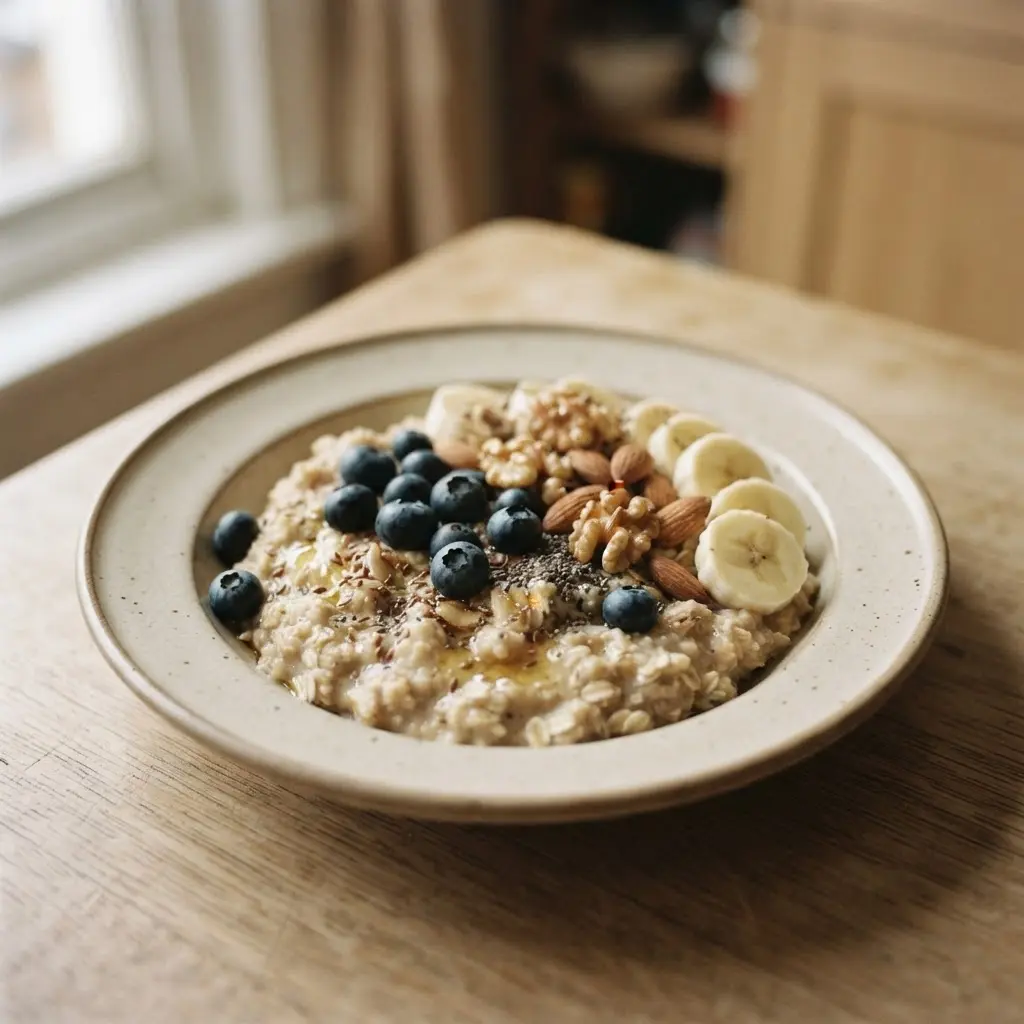
What should you add to breakfast for longer-lasting fullness? Add a measured serving of seeds or nuts. These foods combine protein, fiber, and healthy fats in a small portion. Sprinkle chia seeds into oatmeal, yogurt, or milk. The seeds absorb liquid and form a gel, which adds body to the meal.
Ground flaxseed supplies fiber and omega-3 fatty acids while blending smoothly into yogurt or a smoothie. Choose ground flaxseed rather than whole seeds when nutrient absorption is the goal. Add hemp seeds for complete protein, magnesium, and zinc. Use pumpkin seeds for magnesium, zinc, iron, and crunch.
Sunflower seeds provide vitamin E, magnesium, and selenium. Each variety offers a different nutrient mix, so rotate choices across the week. Top oatmeal or yogurt with almonds, pistachios, cashews, or nutrient-rich walnuts.
Walnuts provide plant-based omega-3 fatty acids, fiber, and antioxidants. Almond butter spreads easily over whole-grain toast and supplies vitamin E, magnesium, and monounsaturated fat. Research suggests combining protein, fiber, and fat creates a more satisfying morning meal than relying on refined carbohydrates alone.
Measure about one-quarter cup instead of eating from a large container. Choose raw or unsalted products to limit added sodium, and check labels carefully for added sugar. Eat Brazil nuts sparingly because one or two provide substantial selenium.
People with nut or seed allergies must avoid the relevant foods and review ingredient labels. Always consult a healthcare professional before making changes to your health routine.
Adjusting Portions To Match Morning Activity
Match breakfast portions to your morning workload, using a larger meal before exercise or physical work and a smaller one before a quiet desk morning. Measuring cups help keep oats, cereal, nuts, and seeds consistent, since these foods pack different amounts of energy into small volumes.
Add protein when breakfast leaves you hungry before lunch, such as an egg, cottage cheese, tofu, or beans. Increase fiber-rich carbohydrates when a workout or long commute demands more fuel, with oats, whole-grain toast, or fruit fitting well. Keep fats moderate before intense exercise, since avocado, nuts, and seeds digest more slowly for some people.
A breakfast journal tracking hunger, activity, and meal size for several mornings gives useful clues for personal adjustments. People with diabetes or other medical needs should ask a qualified clinician for individual portions.
Conclusion
Choosing the Best breakfast foods for sustained energy starts with balance, not strict rules. A meal with protein, fiber, healthy fats, and whole-food carbohydrates often feels more satisfying than a sweet pastry or refined cereal. You do not need a complicated recipe or a long morning routine.
Pick one base, such as oats or whole-grain toast. Add a protein food, fresh fruit, and a small serving of nuts or seeds. For a quick option, stir plain Greek yogurt into oats and top it with berries and walnuts. For a savory meal, pair eggs with whole-grain toast and avocado.
Try one simple combination for several mornings, then adjust the portions and flavors to fit your hunger. Small changes make a healthy breakfast easier to repeat, so choose an option you enjoy and prepare one part ahead tonight.
FAQs
Q: Which breakfast is best before a busy morning?
A: Choose a meal with protein, fiber, and healthy fat. Greek yogurt with berries and walnuts or eggs with whole-grain toast offers a filling combination.
Q: Is oatmeal better than sugary cereal for morning energy?
A: Steel-cut or rolled oats contain more fiber than many sugary cereals. Add plain yogurt, nuts, seeds, or fruit for a fuller meal.
Q: How much protein should breakfast include?
A: Needs vary by person and activity level. A practical approach is adding eggs, yogurt, cottage cheese, tofu, or beans to your morning meal.
Q: What should I eat if I am hungry again before lunch?
A: Add more protein, fiber, or healthy fat to breakfast. A boiled egg, a handful of nuts, or extra fruit works well alongside your usual meal.
Q: Are smoothies good for lasting energy?
A: A smoothie works better as a balanced meal than as fruit juice alone. Blend plain yogurt, berries, oats, nut butter, and milk for protein and fiber.