Want more fiber in your meals without making food feel complicated? Good and healthy sources of fiber include beans, lentils, oats, barley, berries, pears, broccoli, Brussels sprouts, chia seeds, almonds, and other whole foods. These choices add fiber along with vitamins, minerals, and plant protein. A mix of food groups supports regular digestion and fuller meals.
Fiber supports regular bowel movements and helps meals feel satisfying. Soluble fiber appears in oats, beans, apples, and chia seeds, which reminds us that Good and healthy sources of fiber matter for daily energy. Insoluble fiber appears in whole grains, vegetables, and nuts. Both types belong in a varied eating pattern.
I know changing your usual meals takes time. Start with one fiber-rich food at breakfast or lunch, keeping in mind that finding Good and healthy sources of fiber takes a little practice. Drink water throughout the day as your intake grows. Let’s look at five food groups with easy ideas for your next grocery trip.
Soluble And Insoluble Fiber Functions
An apple with its skin supplies both soluble and insoluble fiber, while peeling removes part of its fiber. Soluble fiber forms a gel during digestion, which slows the movement of food and supports steadier blood sugar levels. Oats, barley, lentils, apples, and citrus fruits provide more soluble fiber than most leafy greens, proving that Good and healthy sources of fiber often hide in plain sight.
Insoluble fiber adds bulk to stool and helps food move through the digestive tract. Wheat bran, whole-grain bread, broccoli, cauliflower, and nuts provide useful amounts. Soluble fiber also supports heart health because it helps reduce cholesterol absorption, according to research.
Keep both types in your meals rather than chasing one source, since Good and healthy sources of fiber work best when balanced. A bowl of oatmeal with berries and almonds brings several textures and fiber types together without relying on a supplement.
Hydration And Gradual Fiber Increases
Add half a cup of beans or lentils at a meal, then drink water throughout the day to help your gut adjust. A sudden jump from low fiber to large servings often brings gas, bloating, or cramps. Increase portions over several days, using oats, berries, vegetables, and whole-grain rice as gentle additions, which shows that exploring Good and healthy sources of fiber requires steady pacing.
Fluids help fiber soften stool and move through the digestive tract, so thirst, dark urine, or hard stools signal a need to review your intake. Water fits meals and snacks without added sugar. Rinse canned beans to reduce sodium, and cook dried legumes until tender. If stomach pain continues, or if you have a bowel condition, ask a healthcare professional before making a major dietary change.
1. Fiber Dense Legume Varieties for Everyday Meals
A common mistake is comparing legumes without checking serving sizes. A cup of boiled split peas provides about 16 grams of fiber, while a half cup of cooked pinto beans provides about 7.5 grams. These figures do not describe equal portions, so listing Good and healthy sources of fiber prevents portion errors.
Compare foods using the same serving size and note whether the product is boiled, cooked, or canned. Choose boiled split peas for soups, where one cup supplies about 16 grams of fiber. Boiled lentils provide about 15.5 grams per cup and fit into soups, curries, salads, and grain bowls.
Boiled black beans provide about 15 grams per cup, making them a reliable pantry staple. Research suggests fiber-dense legumes offer a practical way to add dietary fiber through familiar meals. Add them to wraps, salads, side dishes, or grain bowls, since including Good and healthy sources of fiber keeps lunches balanced.
Use canned white beans for a quick meal component. Cannellini, navy, and Great Northern beans provide about 13 grams of fiber per cup. Rinse canned beans before adding them to soups, salads, or side dishes. Chickpeas provide about 12.5 grams per cup and work well in hummus, salads, grain bowls, and pasta-style meals, proving that Good and healthy sources of fiber are widely available.
Build meals with cooked kidney beans, pinto beans, or edamame when smaller portions suit the dish. Kidney beans provide about 6.5 grams per half cup, pinto beans about 7.5 grams, and edamame about 4 grams. Add legumes gradually if your usual intake is low, and drink fluids regularly. Preparation method and serving size affect every comparison.
2. High Fiber Whole Grains for Simple Meals
Start with rolled oats for a fast, fiber-rich breakfast. Cook oats in water or milk, or soak them overnight for a ready-to-eat meal. Oats retain the bran, germ, and endosperm found in the grain. For quick high-fiber breakfasts, add fruit, nuts, seeds, or plain yogurt after preparation.
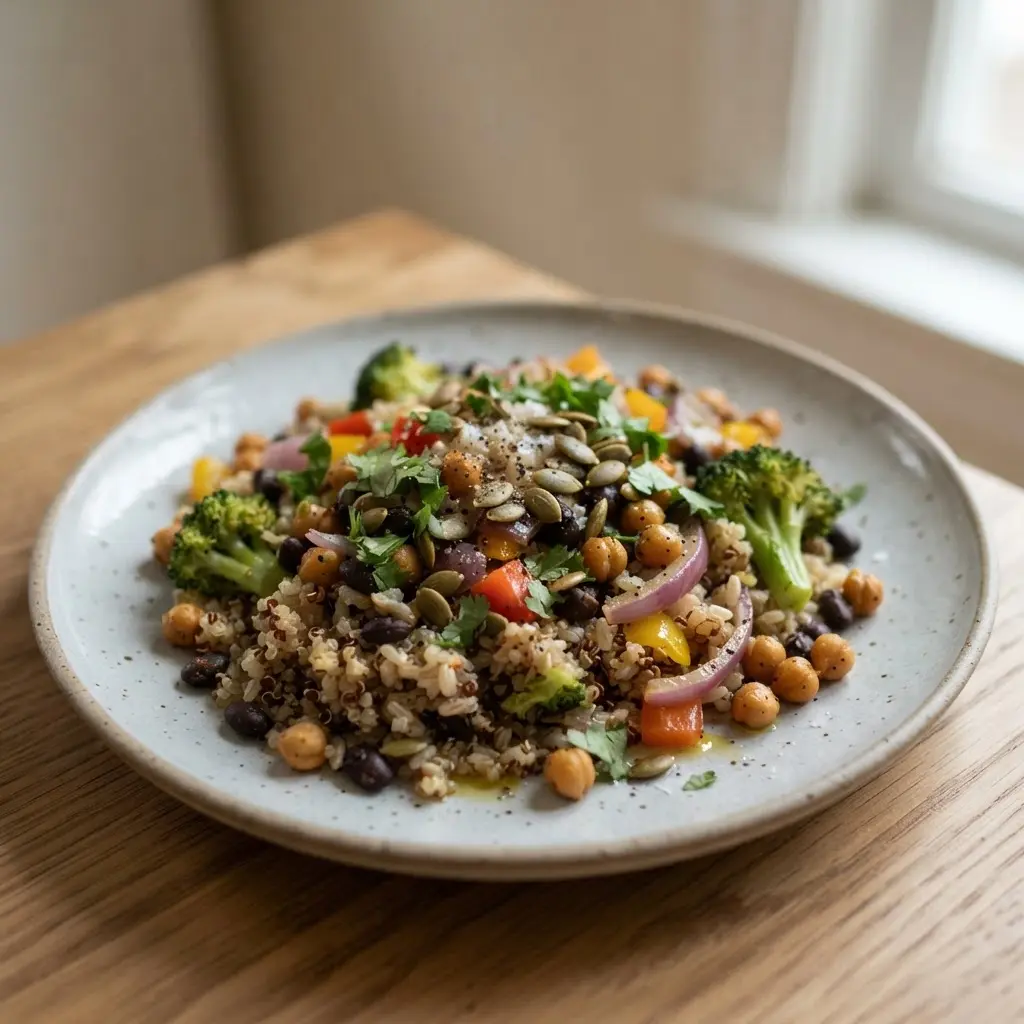
Choose quinoa when you need a quick base for lunch or dinner. Simmer the grains in water or broth until tender, then combine them with vegetables, beans, herbs, or a protein food. Quinoa contains fiber and provides complete protein.
Research suggests whole grains support higher fiber intake when they replace refined grain foods in regular meals. Use hulled barley in soups, stews, or pilafs when a chewy texture suits the meal. Pearled barley cooks to a softer texture but contains less fiber than hulled barley.
Farro offers a similar hearty texture for salads and grain bowls. Bulgur provides a faster option because the cracked wheat has already been cooked and dried. Replace refined products with 100% whole wheat bread or pasta, and always check the ingredient label rather than relying on the word “wheat” alone.
Brown rice also works in stir-fries and rice bowls, though preparation often takes longer than quinoa or bulgur. Cook grains in water or broth, prepare enough for several meals, and refrigerate leftovers promptly.
3. Nutrient Rich Fibrous Fruits for Daily Eating
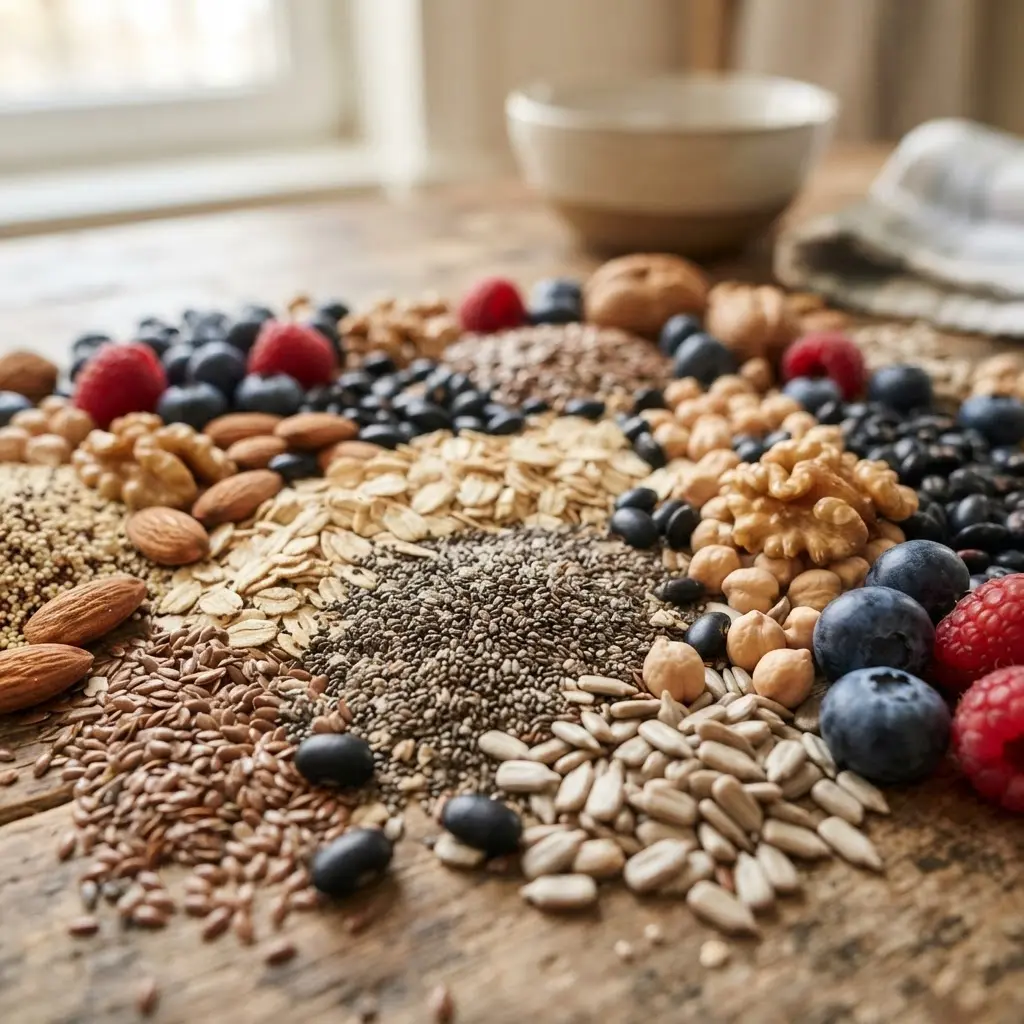
At breakfast, add fresh berries to yogurt, oatmeal, or a smoothie instead of leaving fruit for later. Raspberries, blackberries, blueberries, and strawberries provide fiber, vitamins, and antioxidants. Rotate berry choices through the week to bring different nutrients to the plate.
Pack an apple or pear for a midmorning snack, then wash the skin well before eating. The skin adds fiber, while apples provide pectin, a soluble fiber, and vitamin C. Pears offer fiber and antioxidants too, reminding shoppers that Good and healthy sources of fiber fit any schedule.
Choose whole fruit rather than juice to keep the fiber intact. Use bananas, oranges, and kiwifruit when a portable snack fits the day. Bananas provide potassium and fiber, while slightly green bananas contain notable resistant starch.
Oranges and kiwifruit supply fiber and vitamin C. For skin-focused variety, use glow-boosting fibrous fruits alongside other produce. Spread ripe avocado on toast or add it to a savory meal.
Avocado is botanically a fruit and provides fiber with monounsaturated fats. Fresh figs, prunes, and dried figs offer further choices, though drying concentrates their natural sugar and fiber. Keep portions sensible, increase fiber gradually, and drink adequate fluids when needed. Always consult a healthcare professional before making changes to your health routine.
4. Fiber Packed Cruciferous Vegetables for Balanced Plates
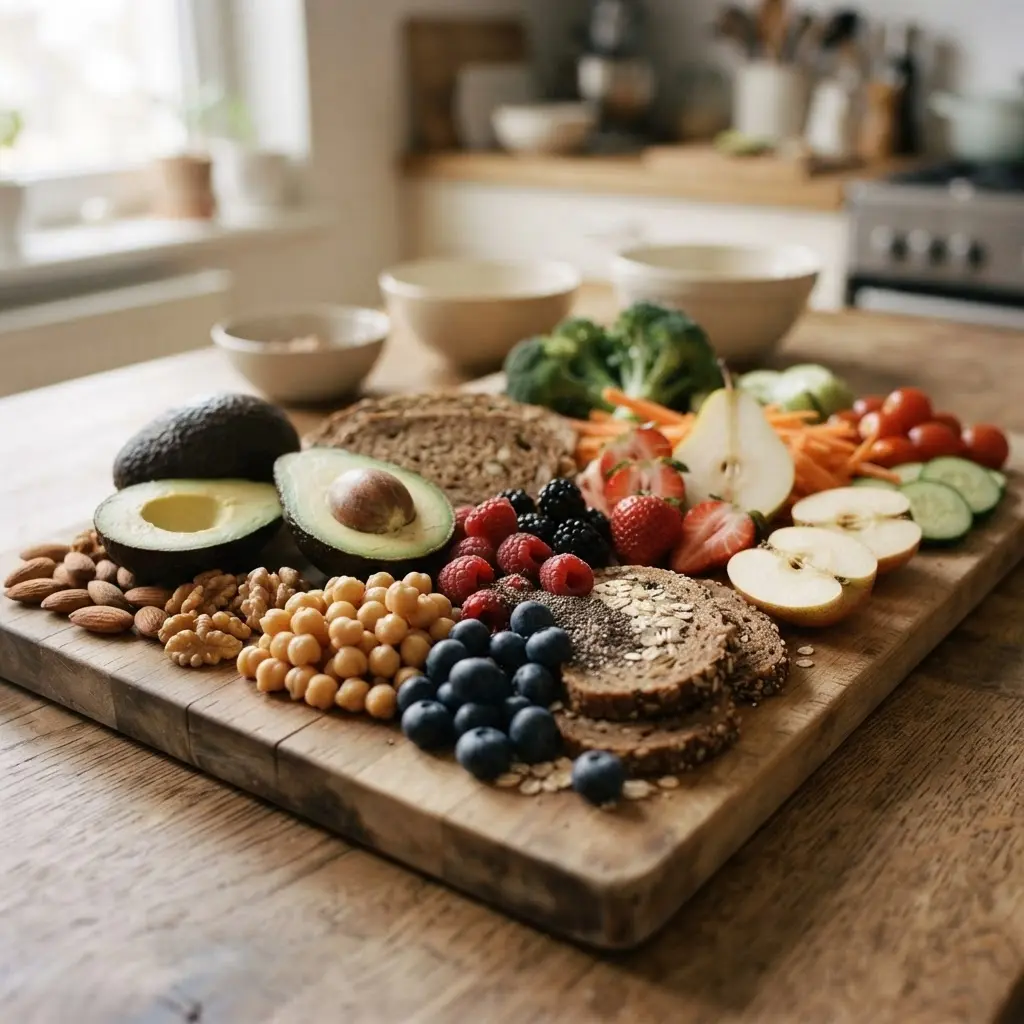
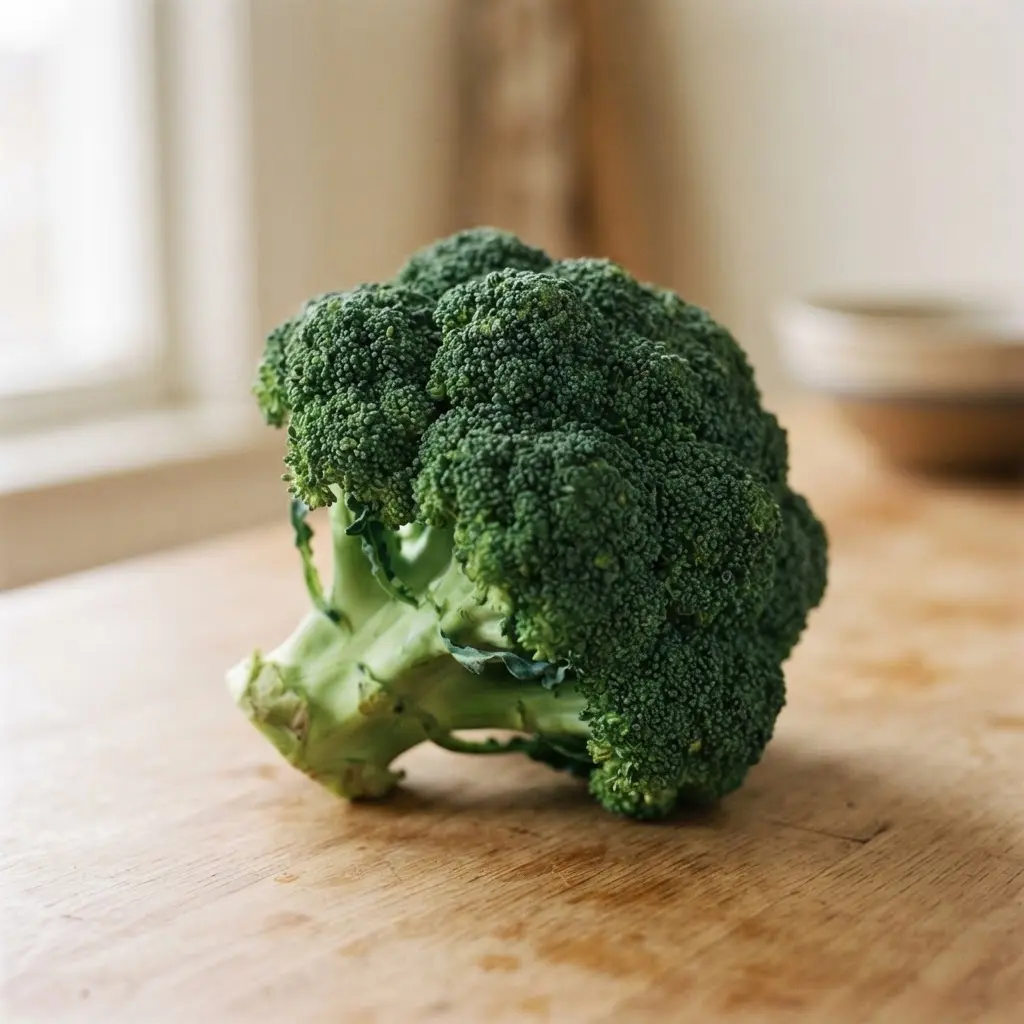
Myth: vegetables must be eaten raw to retain their value. Roasting, steaming, braising, and puréeing all provide useful ways to add cruciferous vegetables to meals. Broccoli, cauliflower, Brussels sprouts, kale, cabbage, arugula, and bok choy bring healing foods rich in fiber, vitamins, minerals, and plant compounds to the plate.
Build meals with half a plate of vegetables, one-quarter lean protein, and one-quarter whole grains. Steam broccoli or bok choy for a quick side dish. Roast cauliflower or Brussels sprouts for a deeper savory taste.
Add raw cabbage, broccoli, or arugula to salads for crunch and freshness. Grate cauliflower as a rice substitute, or purée it into a sauce when a smooth texture suits the meal. Research suggests fiber-rich foods support fullness, which may help with weight management within a balanced eating pattern.
Nutrients such as vitamins C, A, K, and folate improve the overall quality of meals. Match cooking time to the vegetable. Broccoli and bok choy cook quickly, while cabbage and cauliflower need more time for a tender texture.
Balance kale with sweet ingredients when bitterness is strong. Pair cruciferous vegetables with beans, fish, poultry, eggs, tofu, or another protein source instead of serving vegetables alone. People with specific digestive or medical conditions should seek personalised guidance from a qualified healthcare professional.
5. Fiber Dense Nuts and Seeds for Easy Snacks
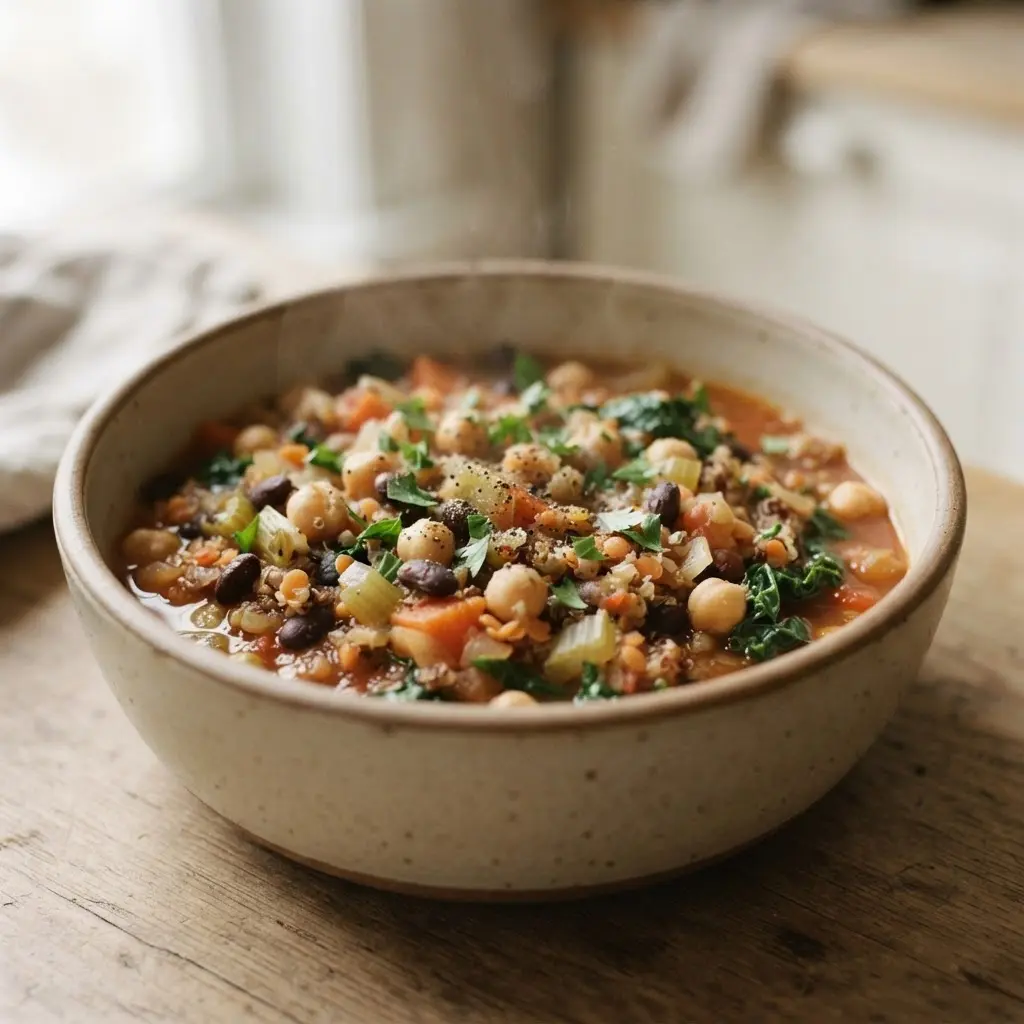
Which nuts and seeds make easy fiber-rich snacks? Choose ready-to-eat nuts such as almonds, pistachios, walnuts, pecans, or hazelnuts. Each option provides fiber along with varied amounts of protein, healthy fats, or vitamin E. Keep a small portion nearby for a quick snack during work, travel, or errands.
Use pumpkin seeds or sunflower seeds when you want extra crunch without preparing a full dish. Pumpkin seeds provide magnesium and zinc, while sunflower seeds contain vitamin E and healthy fats. Sprinkle either seed over yogurt, oatmeal, or fruit. Research suggests replacing lower-fiber snack foods with plant foods supports a more fiber-rich eating pattern.
Stir chia seeds into yogurt or blend them into a smoothie. Chia seeds absorb liquid and add texture as they soften. Mix them into pudding for a snack requiring little preparation. Chia seeds suit soft foods, while pistachios and walnuts provide a firmer, crunchy bite.
Grind flaxseeds before adding them to yogurt, smoothies, or cereal. Ground flaxseeds blend more easily into familiar foods. Store nuts and seeds in a sealed container, and follow package storage guidance to protect flavor. Select unsalted options when you want greater control over sodium.
Reading Labels For Packaged Fiber Foods
Check the Nutrition Facts label for dietary fiber and serving size before trusting a packaged food’s front-panel claim. A cereal labeled whole grain still deserves a look at its fiber grams, added sugar, and sodium. Choose foods with whole wheat, oats, brown rice, or bran near the start of the ingredient list. Compare similar foods by serving size, since a larger listed portion makes fiber numbers look better.
The label gives the clearest fiber figure, while terms such as multigrain do not guarantee an intact whole grain. Granola bars, crackers, and high-fiber cereals often include isolated fibers, which often cause gas for some people. Whole foods such as beans, fruit, vegetables, nuts, and seeds bring fiber alongside water and other nutrients.
Conclusion
Fiber-friendly eating does not call for a complete change in your kitchen. A few steady choices, such as adding lentils to soup or berries to breakfast, add more variety and nourishment to meals. Start with one serving each day, and add it over several days as your body adjusts.
Drink water regularly, especially when meals contain more beans, grains, seeds, or vegetables. A gradual pace often feels better than changing everything at once. Look through your pantry and write down two foods from this list for your next meal, keeping in mind that Good and healthy sources of fiber fit your daily routine.
Let your next grocery trip include one new fiber-rich food and one familiar favorite. Small steps build a routine you can maintain long-term. Your body will notice the steady rhythm of balanced meals.
FAQs
Q: Which foods have the most fiber?
A: Beans, lentils, split peas, bran cereals, oats, berries, pears, chia seeds, and flaxseeds are strong choices. Serving sizes vary, so compare food labels when available.
Q: How much fiber should I eat each day?
A: A common nutrition target is 14 grams for each 1,000 calories. Personal needs vary with age, food intake, and health factors.
Q: Should I increase fiber slowly?
A: Yes. Add one new fiber-rich food at a time and give your body time to adjust. A gradual increase often reduces gas and bloating.
Q: Why does more fiber cause gas?
A: Gut bacteria break down some types of fiber, which creates gas during digestion. A sudden increase often causes more discomfort than a slow change.
Q: How much water should I drink with high-fiber foods?
A: Drink water regularly during the day and include fluids with fiber-rich meals. Good hydration supports softer stools and comfortable digestion.