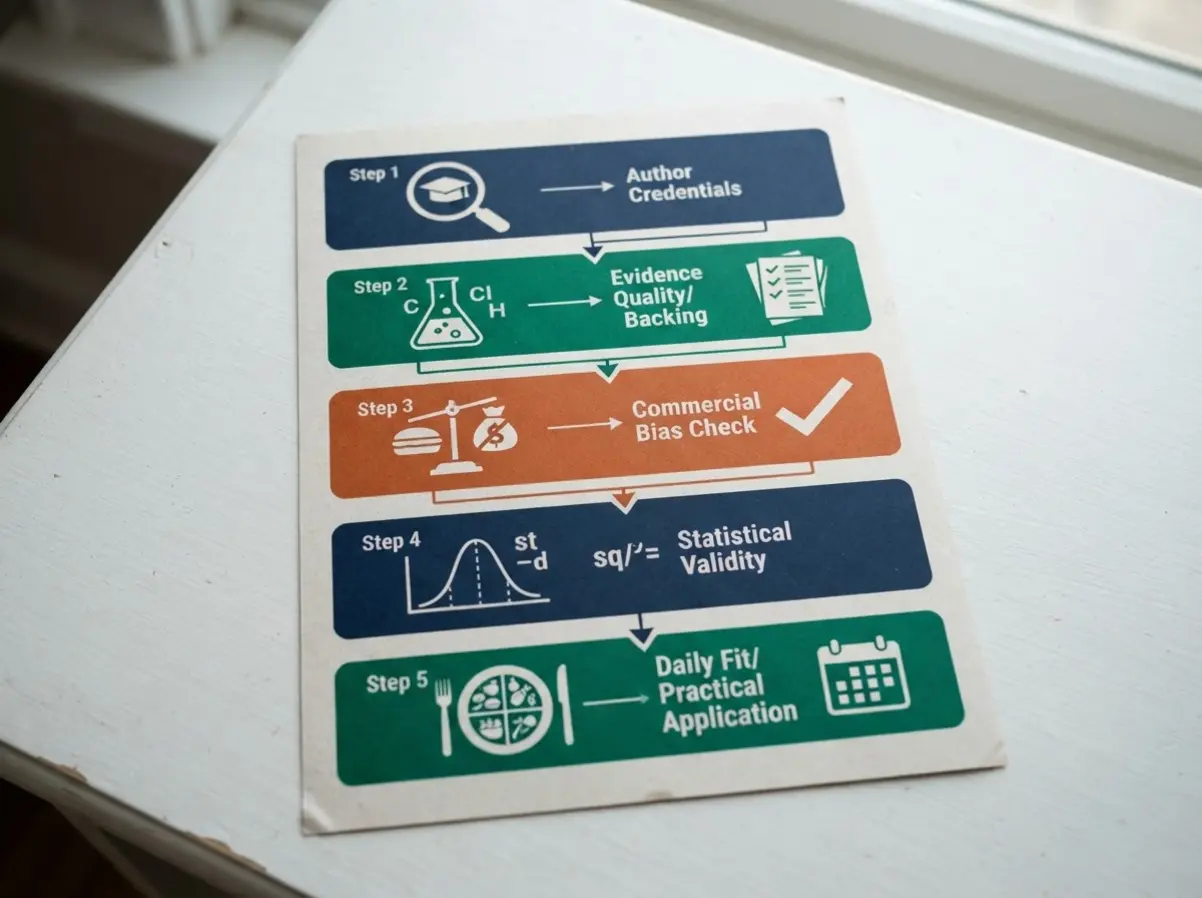
Which nutrition claims deserve your trust? Good nutritional advice usually rests on credible sources, clear evidence, and realistic expectations. Bad advice often uses fear, quick fixes, sweeping promises, or claims backed by one story. Check who wrote it, why they shared it, what research supports it, and whether the guidance fits everyday life. These tips on how to distinguish good from bad nutritional advice give you a simple way to pause and assess a claim before changing your meals. Keep in mind that learning Tips on how to distinguish good from bad nutritional advice takes a quick pause.
Nutrition advice often arrives in bold headlines and short posts, leaving little room for context. It is normal to feel unsure, especially when one expert says one thing and another says the opposite. This guide, following Tips on how to distinguish good from bad nutritional advice, keeps the process practical. You will learn how to check credentials, spot money ties, question dramatic wording, read original research, and test whether a claim fits your budget, culture, and routine. Let’s take the next claim step by step and make a calmer choice.
Trace The Claim To Its Original Source
Trace a nutrition claim to the full research paper before trusting a headline or summary, guided by Tips on how to distinguish good from bad nutritional advice. The paper’s methods section shows whether researchers studied people, animals, or cells, and whether the work measured food intake or tested a planned diet. Check the sample size, study length, and health status of participants because short studies in narrow groups rarely support universal advice. Look for the authors’ institutions, funding source, and declared conflicts of interest near the end. If a news story cites one observational study, read the paper before treating an association as proof of cause. Original sources also reveal missing details, such as dosage, comparison foods, and dropout rates, which summaries often leave out. A reference link should lead to the cited paper, not a sales page.
Check Dates, Updates, And Research Consensus
Check the publication date and update history before using nutrition guidance, since newer reviews sometimes change how researchers view an older result. Search for systematic reviews or meta-analyses, which compare results across studies instead of relying on one striking experiment. Apply Tips on how to distinguish good from bad nutritional advice when weighing recent findings. Give more weight to guidance from public health agencies and professional groups when their recommendations match findings from several research teams. Read the wording closely: association describes a link, while a randomized controlled trial offers stronger evidence for cause and effect. Look for limits involving age, health status, diet length, and study design. Fresh headlines often magnify a small finding, while expert consensus reflects the wider body of evidence. Funding disclosures and correction notices add useful context when two sources disagree.
1. Verify the Author’s Professional Credentials Before Trusting Advice
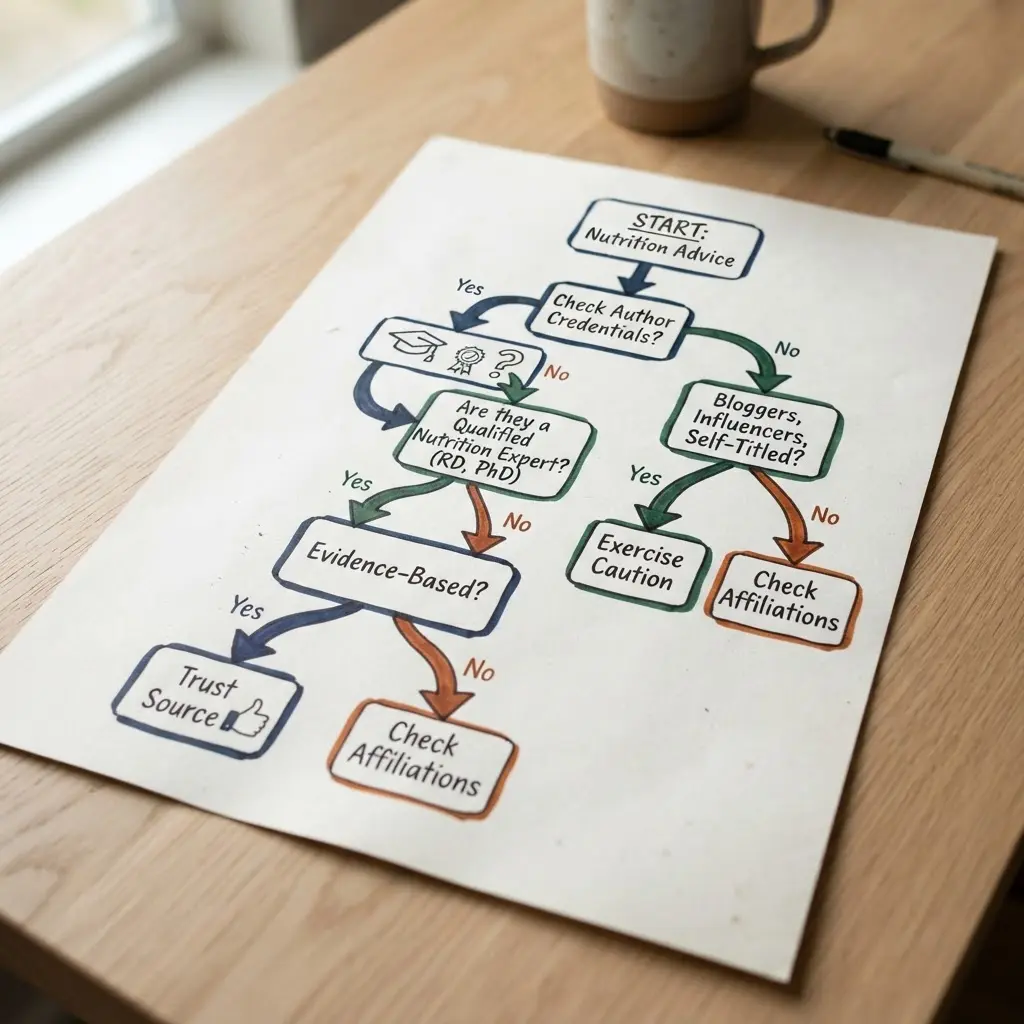
A common mistake is treating a polished profile, confident tone, or large following as proof of nutrition expertise. These features show reach, not training. Start with a credential check before accepting advice about food, supplements, or health.
Look for the author’s full name, education, professional title, and current work setting. A registered dietitian, licensed nutrition professional, or medical clinician should identify the organization or licensing body connected to the title. Search the relevant public register when one exists. Match the author’s name and status, rather than relying on a logo or short biography, which matches Tips on how to distinguish good from bad nutritional advice.
Read the author’s qualifications closely. A short online course, weekend certificate, or personal success story does not equal regulated clinical training. Separate academic degrees from certificates issued by private programs. Check whether the person gives general education or presents personal advice as treatment. Clear limits show better professional practice.
Review conflict disclosures before following product recommendations. An author who sells supplements, meal plans, testing kits, or paid consultations has a financial interest in some advice. Look for current sources and plain explanations of uncertainty. Avoid claims promising fast results, universal rules, or cures through one food.
Research suggests readers assess health advice more carefully when source quality and financial interests are visible. Use credentials as one screening step, then judge the evidence, the scope of the claim, and whether the advice fits your health needs. Seek guidance from a qualified clinician for personal treatment decisions, applying Tips on how to distinguish good from bad nutritional advice at each step.
2. Identify Underlying Financial Conflicts of Interest Clearly
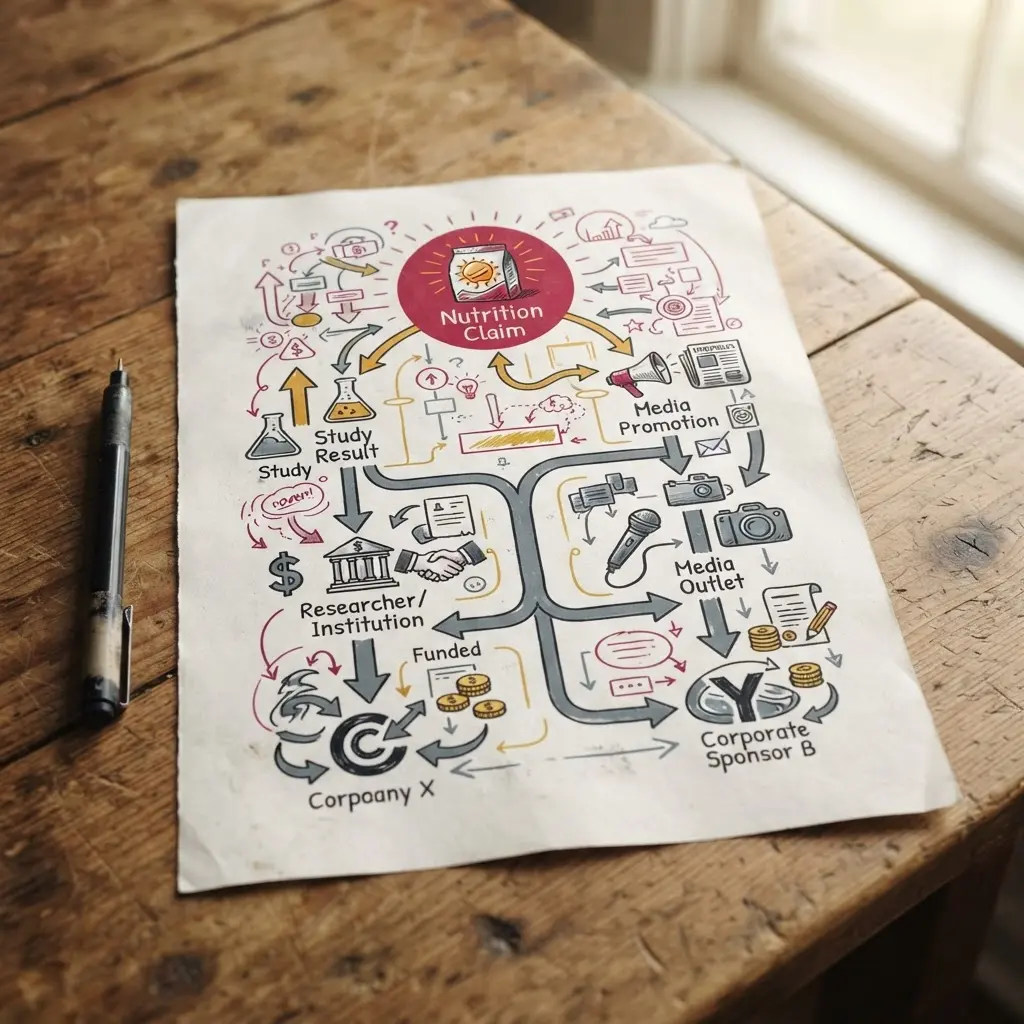
Start by checking who funds the advice before accepting a nutrition claim. Look for the person or organisation behind the message, the product named, and the money connected to the recommendation. A paid relationship does not prove false information, but missing or unclear details deserve closer review, a core point of Tips on how to distinguish good from bad nutritional advice.
Read the author profile, disclosure statement, and product links. A supplement seller, brand owner, paid consultant, or affiliate partner has a financial reason to promote certain choices. Check whether the advice applies beyond one product or purchase. Claims built around a single powder, meal plan, or paid membership need stronger independent support.
Separate the health claim from the sales message. Advice such as “buy this plan to fix your metabolism” combines a health promise with a purchase request. Search for named sources, clear limits, and agreement across independent health bodies. Compare the message with other reliable nutrition information before spending money.
A financial conflict does not automatically make advice wrong. Clear disclosure gives readers context for judging the claim, while hidden ties make careful evaluation harder. Write down the speaker, product, sponsor, and requested purchase before acting. Check disclosure details each time advice promotes a specific food, supplement, service, or paid plan, using practical screening methods to stay safe.
3. Check for Sensationalized, Hyperbolic Language in Headlines
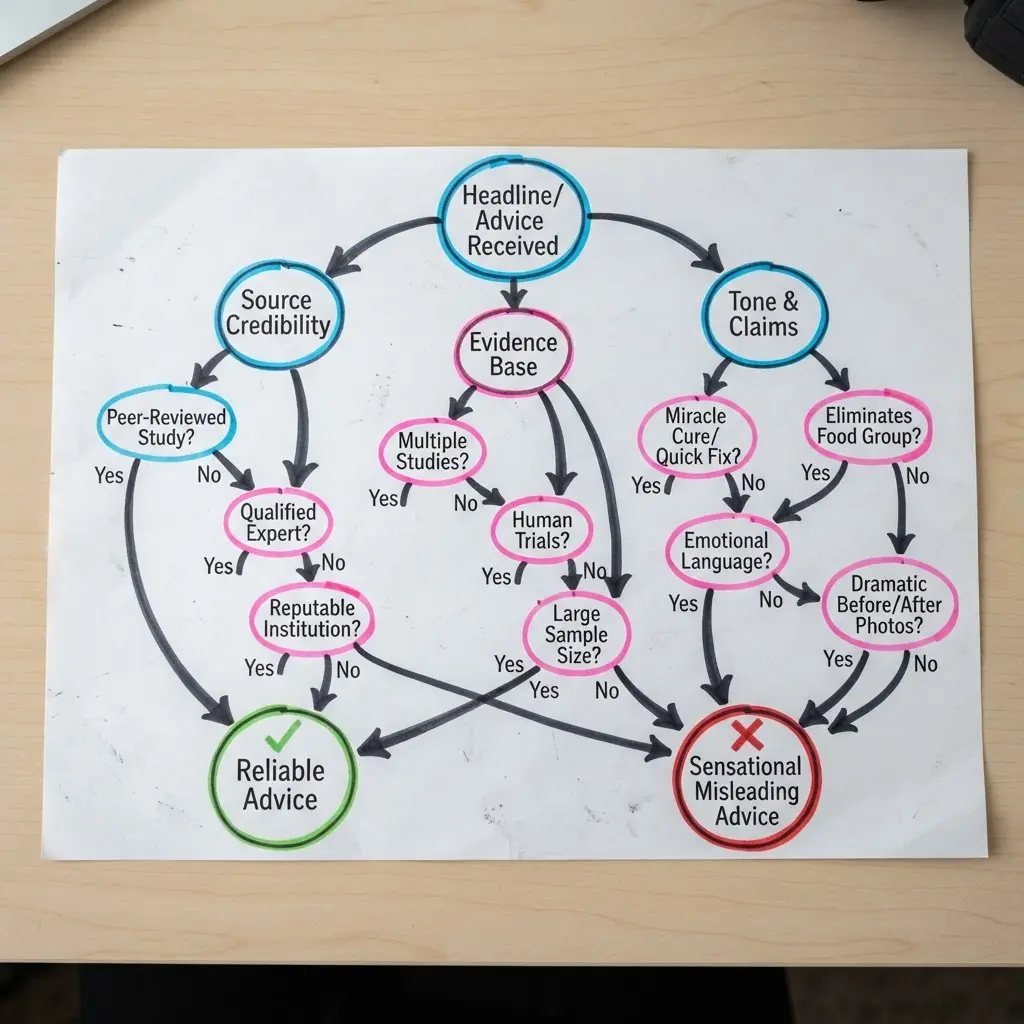
At 7 a.m., a social media headline promises a “miracle” food capable of melting fat before breakfast. Pause at the headline wording before opening the article. Terms such as “shocking,” “unbelievable,” “disaster,” and “outrage” seek an emotional reaction. Such language does not show whether the nutrition claim is sound, reminding us of Tips on how to distinguish good from bad nutritional advice.
Strip away dramatic terms and state the claim in plain words. Then ask whether the headline presents a universal result, a rare finding, or a limited study result. Check for absolute phrases such as “always,” “never,” or “everyone.” A confident tone does not replace evidence. Focus on the plain-language claim beneath the emotional wording.
Read the full article rather than relying on the headline. Compare the headline with the body text, study details, limits, and quoted sources. The article should explain the evidence without presenting one surprising angle as the whole story. Check whether the claim fits evidence from popular diet myths debunked before accepting a dramatic conclusion. A mismatch between headline and article is a clear warning sign, which ties back to Tips on how to distinguish good from bad nutritional advice.
Research suggests emotionally charged headlines shape attention before readers assess the facts. This effect makes a dramatic phrase feel more credible or urgent than the supporting evidence deserves. Treat sensational wording as a signal for closer reading, not as proof that every detail is false. Compare headline and article before accepting a nutrition claim.
4. Cross-Reference Primary Scientific Sources for Support

A scientific-looking article is not automatically primary research. A primary source reports new data from the researchers who conducted the study, with sections such as methods, results, and discussion. Start by checking the publication type in PubMed or Web of Science, then confirm the paper describes an original study. This matches Tips on how to distinguish good from bad nutritional advice.
Do not rely on the abstract alone. Read the methods section to see who took part, what food or nutrient researchers examined, and how outcomes were measured. A study about supplements in adults does not directly support advice aimed at children. Research design, participant group, and outcome measure must match the common misleading nutrition claims.
Compare the study results with the exact wording of the advice. An association between two dietary patterns does not prove one caused the other. Check whether the paper reports limits, uncertainty, and differences between groups. Use the references list to find related original studies rather than accepting one citation as final proof. Research suggests readers gain a clearer view of nutrition claims when they compare evidence with the study methods and results.
Check multiple original studies before accepting strong advice. Look for similar findings across research papers, along with differences in study design and participants. Reviews and meta-analyses provide useful summaries, but they do not replace inspection of the original data when a claim seems broad or dramatic. A calm reading of methods, results, discussion, and references often reveals whether advice matches the evidence.
5. Assess Nutritional Claim Sustainability and Feasibility in Daily Life
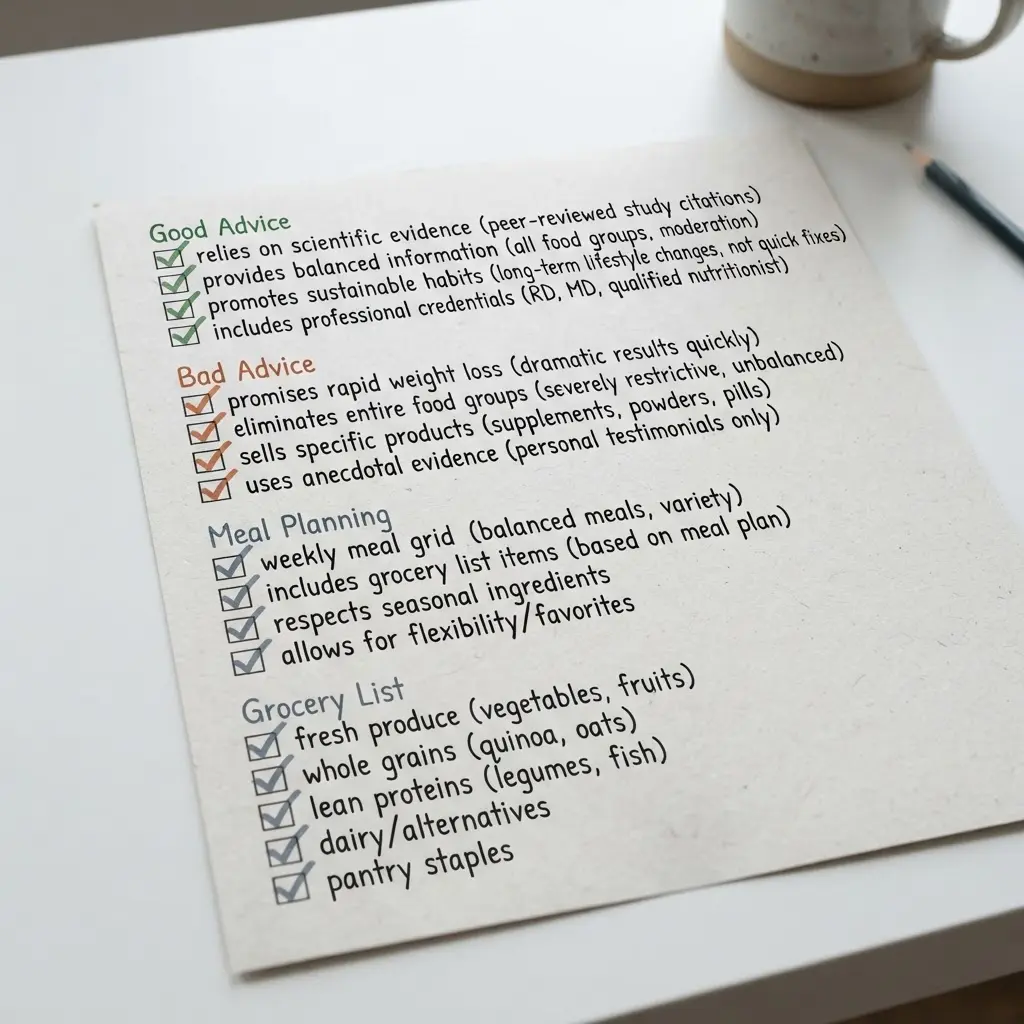
How do you know whether a nutrition claim will work in daily life? Use a feasibility check before changing your eating pattern. Examine the evidence, source, and wording. Prefer recognised dietary guidance and credible research over testimonials, absolute promises, or one isolated study. Apply Tips on how to distinguish good from bad nutritional advice during this review.
Test the claim against your budget, shopping access, storage space, cooking skills, and available time. A recommendation requiring costly specialty foods or several hours of preparation each week will struggle to fit ordinary routines. This check exposes the long-term failure of fad diets by testing whether advice fits ordinary budgets and routines.
Review nutrient coverage before accepting restrictive advice. Check whether meals provide enough protein, fibre, vitamins, and minerals across the day. Fully plant-based or highly restricted patterns need careful food choices, fortified products, or professional guidance for certain nutrients. A healthy label does not prove nutritional adequacy.
Match the recommendation with familiar foods, cultural habits, household needs, and local availability. Choose advice offering practical substitutions when prices rise or ingredients disappear from local shops. Research on sustainable diets links lasting use with health, affordability, accessibility, cultural fit, and environmental responsibility rather than one food or product.
Check label transparency before trusting terms such as natural, local, or eco-friendly. Look for defined standards and named evidence. Restrictive diets and diets excluding major food groups require careful nutritional planning. Always consult a healthcare professional before making changes to your health routine.
Discuss Unresolved Concerns With A Dietitian
Ask a registered dietitian to review nutrition advice when it conflicts with a medical condition, medication, or diagnosed deficiency. A dietitian separates a sound recommendation from a supplement pitch and explains how evidence fits your usual eating pattern. Bring the original study, headline, or supplement claim, along with your questions about dose, safety, and expected benefit.
Personal guidance matters when advice involves kidney disease, diabetes, pregnancy, food allergies, or eating disorder recovery. Your clinician and dietitian might need to work together when a food change affects medication timing or blood sugar. Ask how strong the evidence is, who took part in the research, and whether the proposed change suits your budget and access to food. Good counsel also includes clear signs to stop a supplement and seek medical help.
Conclusion
Food choices often connect to family routines, culture, budget, and personal goals. Good advice should respect those details instead of pushing one rigid rule. When you use Tips on how to distinguish good from bad nutritional advice, you gain a calmer way to review claims before they shape your shopping list. Start today with one headline or product promise. Check the writer, look for money ties, read the supporting research, and ask whether the suggestion fits your meals over time. If key details are missing, pause before spending money or changing your routine. You do not need perfect knowledge to make a thoughtful choice. One careful check is a useful step toward food decisions built on evidence and comfort. Keep your questions close, choose sources with clear support, and give yourself room to decide what fits your life.
FAQs
Q: How do I check a nutrition writer’s credentials?
A: Look for a listed degree, license, or certification from a recognized health organization. Check whether the training matches the topic being discussed.
Q: How do financial conflicts affect nutrition advice?
A: A product sale, paid partnership, or brand connection affects how a claim should be read. Look for clear funding details and compare the advice with independent sources.
Q: Why should I question dramatic nutrition headlines?
A: Strong words often leave out limits, study details, or differences between people. Read past the headline and check whether the claim uses fear or promises fast results.
Q: Where should I look for research behind a food claim?
A: Start with the study or review linked in the article. Check the research group, date, methods, and whether other trusted sources report similar findings.
Q: How do I know whether nutrition advice fits my life?
A: Review the cost, time, food access, culture, and rules involved. Advice suited to daily meals and long-term habits is easier to follow than a rigid plan.