Does your coffee taste flat, sour, or bitter even when you follow the same routine? Things that make a good coffee include fresh, quality beans, a suitable roast date, an even burr grind, balanced water, a measured coffee-to-water ratio, steady heat, and clean equipment. You might wonder what truly counts among Things that make a good coffee, but the answer is straightforward.
Small changes often bring a clear difference in your cup. I’ll walk you through seven simple checks for better home coffee. You’ll see how bean quality, freshness, grind size, water, measurements, temperature, and equipment care work together. Let’s make your next cup smoother, fuller, and easier to repeat.
Understanding Coffee Processing Labels
Choose a washed Ethiopian bean when you want a cup with crisp acidity and floral notes, while a natural process often brings sweeter fruit flavors. The label describes how producers remove fruit from coffee cherries before drying the seeds, so it offers clues beyond the country name. When you think about Things that make a good coffee, the label gives you a quick hint. Washed coffee usually tastes cleaner because fermentation contact stays shorter.
Natural coffee often carries heavier fruit character, since the cherry dries around the seed. Honey or pulped-natural processing leaves some sticky fruit material in place, often giving moderate sweetness and body. Pair the label with roast level for a clearer prediction.
A light roast keeps more origin character, while a medium roast adds caramel notes. Record the processing method beside each bean name during comparison.
Building A Personal Tasting Vocabulary
Use three plain words, such as sweet, sharp, and heavy, to describe a cup before reaching for specialty terms. Sweet points toward caramel, honey, or ripe fruit. Sharp often signals noticeable acidity, while heavy describes body, the weight coffee seems to have across your tongue.
Many beginners list Things that make a good coffee, yet they forget how texture changes the whole experience. Aroma deserves its own note because coffee often smells floral while tasting nutty or chocolate-like. Add a texture word, such as silky, dry, or creamy, when the cup leaves a clear mouthfeel.
Specific comparisons help more than broad praise. Saying “orange-like acidity” gives better guidance than “good flavor.” A tasting wheel offers prompts for fruit, spice, floral, nut, and cocoa notes, but your own familiar references matter most. Keep descriptions short enough to compare across brews.
1. High Quality Coffee Beans for Cleaner Flavor

A common mistake is choosing dark-roasted beans because the deep color looks premium. Roast level does not prove bean quality. Understanding Things that make a good coffee means ignoring dark colors and checking the bean origin instead. Very dark roasting often covers floral, citrus, fruit, and origin notes with bitterness or burnt flavors.
Choose a roast suited to the cup profile you want. Start with washed processing when clarity is the priority. This method removes fruit and mucilage from the seed before drying, allowing acidity and origin character to stand out.
High-elevation Arabica beans often show concentrated flavor, while carefully managed natural processing creates sweeter fruit notes. Look for a named region, farm, or specialty lot rather than a broad country label alone. People often debate Things that make a good coffee, but a clear origin name usually wins out.
Check for uniform bean size and a stated roast date. Similar bean size and density support even roasting, so fewer beans remain underdeveloped while others become overly dark. I always check Things that make a good coffee by holding the beans up to the light first. Specialty grading also considers defects and cup quality.
Some premium lots receive scores of 80 or higher on the Specialty Coffee Association scale, though the score should support, not replace, your taste preference. Match the beans to your preferred cup. Choose Gayo Thermal Full Washed for floral and citrus notes, Mysore Nuggets Extra Bold for chocolate and roasted nuts, or Monsooned Malabar Arabica AAA for low acidity and earthy chocolate. Colombia Huila offers brown sugar, cherry, and pecan notes.
Listing Things that make a good coffee starts with picking one trusted farm and sticking with it. Research suggests cleaner, more consistent beans reduce distracting off-notes, so buy a small bag first and adjust the roast level or processing style after tasting.
2. Optimal Roast Date Freshness and Cup Flavor

Buy beans with a clearly printed roast date, then wait before brewing. Freshly roasted beans release carbon dioxide, or CO₂, during degassing. During the first 0–3 days, excess gas often produces sharp, foamy, muted cups and uneven extraction. Tracking Things that make a good coffee means noting that fresh does not always mean ready today.
A roast date gives you a practical starting point for choosing a brewing day, rather than assuming the newest bag is ready. Set a first tasting date between 5 and 21 days after roasting for most filter coffee. You can verify Things that make a good coffee by waiting a full week before opening a new bag. Washed coffees often begin showing clearer flavor near day 7.
Filter brewing frequently suits a 7–21-day window because volatile aromas remain present while gas levels settle. Taste the cup and record whether sweetness, acidity, and origin character become clearer across several days. Rest espresso beans longer before judging the shot.
Start testing around 10–30 days after roasting, since pressure-sensitive brewing responds poorly to excess CO₂. I count those days carefully because Things that make a good coffee rely on patience. Too much gas disrupts water flow and extraction.
This often produces thin crema, sharp flavor, or unstable shots. Store beans in an airtight container away from heat, light, and oxygen. Do not treat 30 days as a strict cutoff. Coffee beyond this point often stays drinkable, though delicate floral and fruity aromas fade as oxidation reduces flavor complexity.
Dense or complex coffees sometimes benefit from 6–8 weeks of rest. Adjusting Things that make a good coffee often means simply waiting a bit longer before grinding. Research suggests freshness windows work best as starting points because roast level, bean density, processing method, storage, and brewing method all change the timing.
Adjust the brew date when flavor becomes flat or extraction grows difficult.
3. Uniform Burr Grind Size for Even Extraction
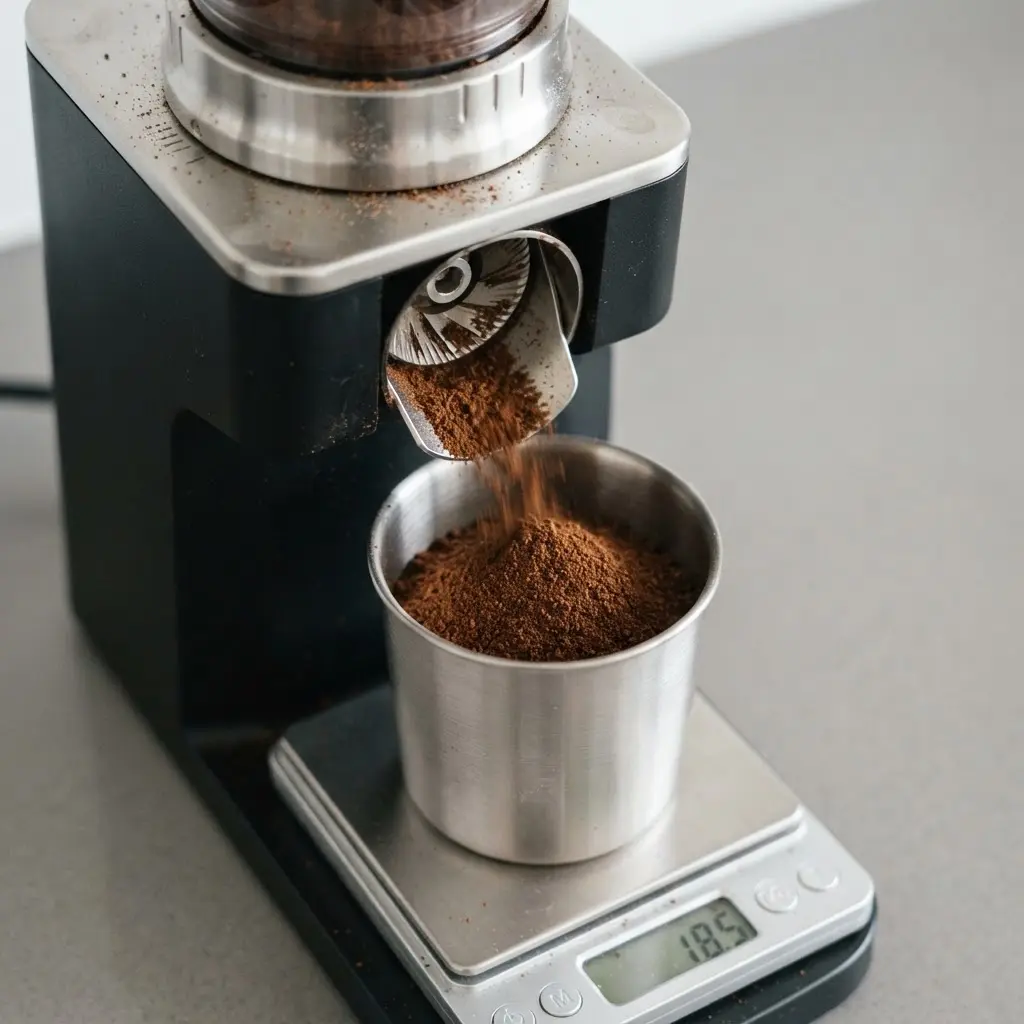
At 7 a.m., a pour-over tastes sour in one cup and bitter in the next, even though the recipe has not changed. Start with a burr grinder to crush beans between two abrasive surfaces. Fixing Things that make a good coffee usually begins with upgrading your grinding tool first.
A narrow particle range gives water more even contact with the coffee bed than a blade grinder usually provides. Choose a method-specific grind before brewing. Remember that Things that make a good coffee shift depending on your chosen brew style. Espresso often needs particles around 200 to 400 microns, while pour-over commonly starts near 500 to 800 microns.
French press usually works with 800 to 1,000 microns, and cold brew often uses 700 to 900 microns. Treat these figures as starting points because beans, grinder design, and equipment alter the result. Watch for fines and boulders.
Fines have more surface area and extract quickly, which can add bitterness or harshness. Spotting Things that make a good coffee requires watching for those uneven chunks. Boulders extract slowly and can leave a cup weak or sour.
A similar average size does not guarantee a similar result if particle distribution differs between batches. Distribute grounds evenly before adding water. Uneven grounds create fast water paths called channeling. Research on extraction supports consistent particle size as a way to make extraction more predictable, balanced, and easier to repeat.
Adjust the grind one step at a time. Move slightly finer for sour or weak coffee, and move slightly coarser for bitter or harsh coffee. Espresso needs special care because an excessively fine setting can block water flow and choke the machine.
4. Balanced Water Mineral Content for Clear Taste
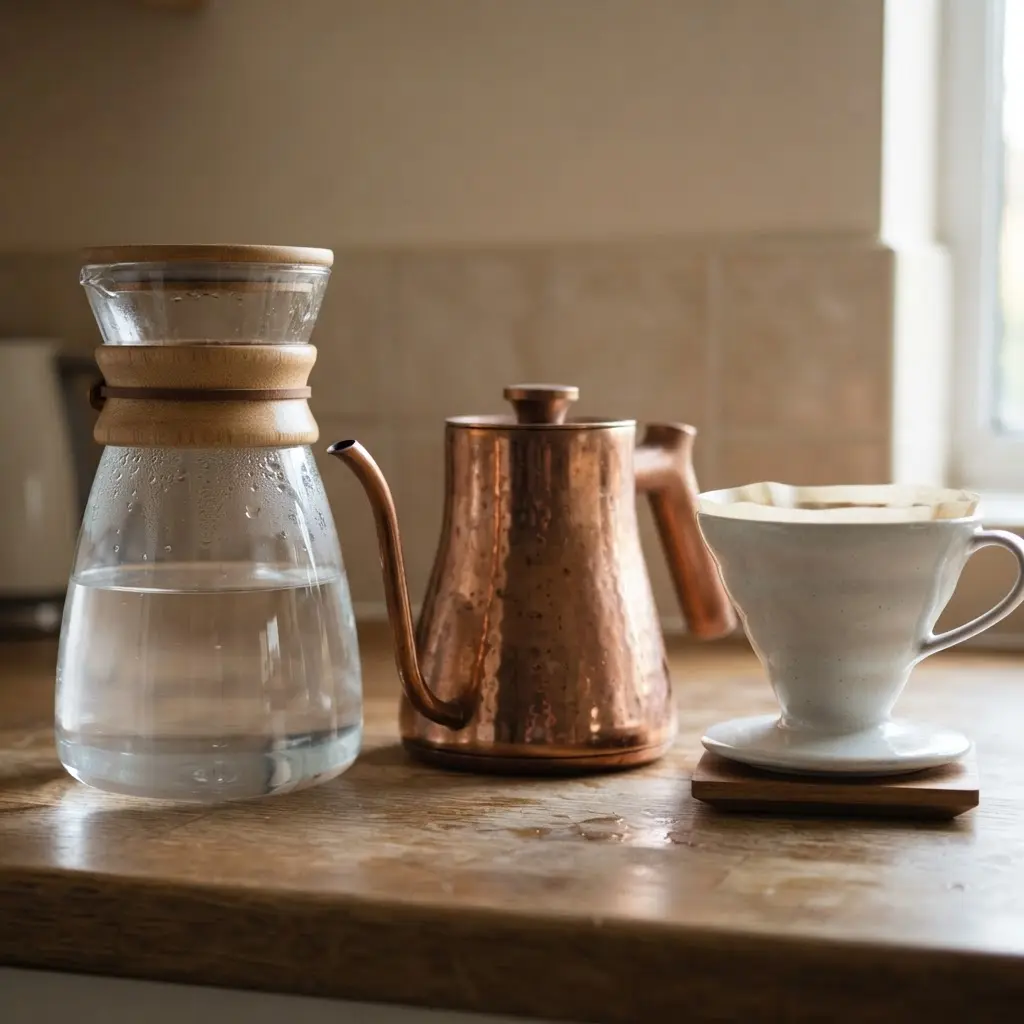
Many people believe the lowest-mineral water produces the cleanest cup. The opposite is often true: water below 100 mg/L TDS often tastes flat, while water around 200 to 400 mg/L often has a more balanced taste. Testing water is one of the easiest Things that make a good coffee stand out right away.
TDS, or total dissolved solids, measures all dissolved material rather than identifying each mineral. Choose a moderate mineral profile for a clearer starting point. Calcium adds smoothness and body, while magnesium adds texture.
At 100 to 500 mg/L, magnesium astringency becomes more noticeable. Above 400 mg/L TDS, water develops a stronger mineral taste. Strong water flavors compete with coffee, making delicate acidity and sweetness harder to separate.
Read a water-quality report when possible. Sodium and bicarbonate deserve attention because high levels often dominate the cup. Sodium chloride is typically acceptable below 290 mg/L, while levels above 465 mg/L are often disliked.
Magnesium chloride above 47 mg/L and magnesium bicarbonate above 58 mg/L are also often disliked. Use a TDS meter as a screening tool, then check the mineral breakdown. Two waters with similar TDS readings still taste different when one contains more calcium, magnesium, sodium, or bicarbonate.
Sensory assessments suggest balanced mineral levels support a cleaner tasting cup. Aim for moderate total minerals without an excessive amount of one compound.
5. Precise Brew Ratio Measurements for Consistency
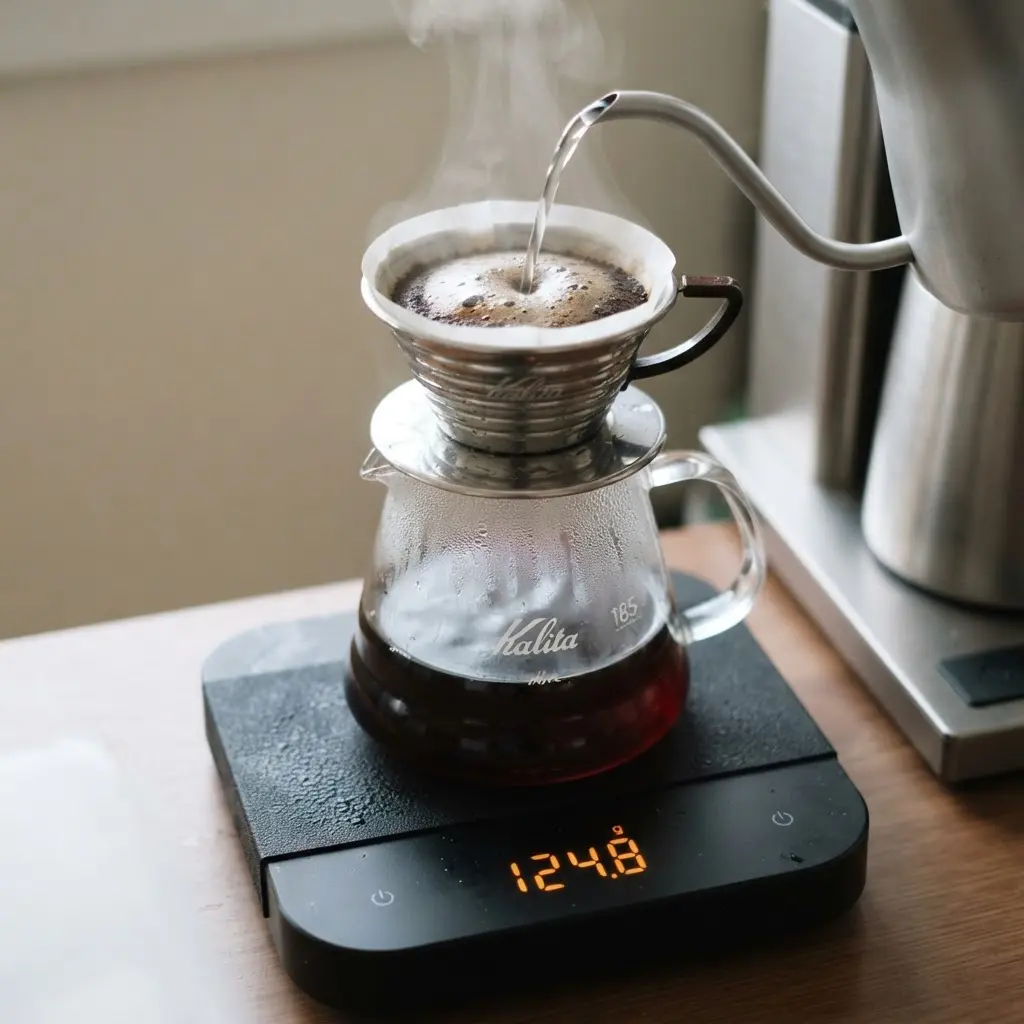
How do you repeat a coffee recipe with the same balance each time? Use a digital scale and measure coffee and water in grams. A brew ratio shows the relationship between dry coffee and brewing water.
A 1:16 ratio uses 1 gram of coffee for every 16 grams of water. Volume measures vary because bean density changes with roast level and grind size. Weigh the coffee dose first, then multiply the dose by the chosen ratio.
For example, 20 grams of coffee multiplied by 16 requires 320 grams of water. Starting with a fixed water amount? Divide water weight by the ratio. Three hundred grams of water divided by 15 requires 20 grams of coffee.
Research suggests a useful starting point is about 60 grams of coffee per litre of water, close to a 1:16.7 ratio. Place the brewing vessel on the scale and use the tare function before adding coffee or water. Weigh water by mass rather than relying on volume markings.
Record grind setting and brew time with the dose and water amount. Many people find this process useful because one change at a time makes taste differences easier to identify. A 1:15 ratio uses more coffee relative to water and generally produces a stronger brew than 1:16.
A coffee tasting weak may benefit from less water relative to the dose. For espresso, compare the dry dose with the final liquid yield, since some water stays in the coffee puck. Check scale accuracy monthly or whenever readings seem inconsistent.
6. Consistent Water Temperature Control for Smooth Flavor

Boiling water is not automatically better than water held within a steady range. Use 195–205°F (90–96°C) throughout brewing to keep extraction controlled. Hotter water pulls flavor compounds out faster, while cooler water slows the process.
A stable temperature supports a smoother, more balanced cup. Heat the water, then protect the target temperature from the first pour to the last. Preheat the brewer and cup before brewing.
Cold equipment draws heat from the water, which creates a sudden drop and changes extraction. A temperature-control kettle, regulated brewer, or thermometer makes each batch easier to repeat. Espresso needs close attention because small temperature changes affect flavor quickly.
Water above 93°C often increases bitterness and astringency. Some tasters prefer temperatures below 90°C for a softer, less bitter result. Research on coffee extraction supports matching temperature to the desired cup profile rather than treating one setting as perfect for every coffee.
Watch for clear taste signals. Water that is too hot often produces bitter, burnt, or harsh flavors. Water that is too cool produces a weak, sour, thin cup with little body.
Check temperature during brewing, not only when the kettle first reaches the target. Stable heat gives each batch a more predictable flavor.
7. Clean Brewing Equipment Maintenance for Fresh Results

A common mistake is treating brewing equipment as clean after the used grounds leave the basket. Correct the habit by checking every part touched by coffee or water. Clean brewing parts include the basket, filter holder, carafe, lid, and any visible water path. Coffee residue can stay behind in seams and corners, even when the surface looks clear.
Inspect the equipment after each use. Remove grounds before they dry, rinse away visible residue, and wash removable parts according to the manufacturer’s instructions. Give special attention to the carafe lid and filter holder, where oils and fine particles often collect.
Dry each part fully before reassembly. Moisture trapped inside a closed brewer creates an unsuitable storage condition for leftover residue. Keep a written maintenance schedule for routine cleaning and deeper care.
The available research for this chapter does not establish a verified cleaning sequence, product choice, or fixed time period. Follow the instructions supplied with the specific brewer rather than applying one process to every machine. Stop using a part if cracks, buildup, or damage prevent proper cleaning.
Clean equipment matters because old residue mixes with a fresh brew and changes the drink’s taste. Available research here does not provide a measured claim about the size of this effect, so avoid promises about guaranteed freshness. A careful check of the basket, carafe, filter holder, and water path provides a practical safeguard. Inspect before brewing and keep the equipment free from visible coffee residue.
Recording Adjustments After Each Brew
Write the grind size, coffee dose, water amount, brew time, and tasting result in one brew journal after each cup. A short entry reveals patterns hidden by memory, such as bitterness following a finer grind or weak flavor following too little coffee. Change one variable between brews so your notes show which adjustment caused the difference.
Include bean name, roast level, processing method, and brewing method beside each record. Rate sweetness, acidity, bitterness, body, and aroma on a simple five-point scale. Note water temperature when flavor shifts, since water near 90 to 96 degrees Celsius supports steady extraction.
Review three or four entries together before making another change. Your notes then become a practical reference for repeating a balanced cup.
Conclusion
Your morning cup often reflects a few small choices made before the first sip. Fresh beans, even grounds, balanced water, accurate measurements, steady heat, and clean equipment give you more control over flavor. The Things that make a good coffee are simple enough for any home routine.
Keeping a short checklist of Things that make a good coffee helps you repeat your favorite results daily. Start with one change instead of changing everything at once. Weigh your coffee and water, then note the grind setting, brew time, and taste.
If the cup tastes sour, use a finer grind or a little more brew time. If it tastes bitter, use a coarser grind or less heat. Keep the change small, then taste again.
This simple habit helps you learn what your beans prefer. Soon, your daily brew will feel more consistent and suited to your taste. Keep your notes nearby, and give your next cup the care it deserves.
FAQs
Q: What roast date is best for coffee?
A: Look for a clear roast date on the bag. Beans often taste freshest after a short rest period and before long storage reduces aroma.
Q: Why does my coffee taste sour?
A: Sour coffee often points to low extraction. Use a finer grind, slightly longer brew time, or hotter water, then taste the result.
Q: Is a burr grinder better than a blade grinder?
A: A burr grinder creates more even particle sizes. More even grounds support steadier extraction and a cleaner cup.
Q: What water is best for brewing coffee?
A: Use clean filtered water with balanced mineral content. Strong odors, heavy mineral buildup, or flat-tasting water often affect the cup.
Q: How often should coffee equipment be cleaned?
A: Rinse brewing parts after each use and wash them on a regular schedule. Remove coffee oils and mineral buildup before they affect aroma or taste.